


Dev Blog #91
Greetings, comrades!
Today, we continue our extensive coverage of Deck Ops, the expansion for Korea: IL-2 Series.
This time, we're returning to a Dev Blog format we haven't used in quite a while. But it might just be one of the most interesting kinds of Dev Blog.
In these issues, we take an in-depth look at the places where pilots experience some of the most thrilling moments of their lives—and which you spend most of your time looking at while flying in the simulator. We're talking about cockpits.
And in this issue, we're going to take a close look at the F9F-2 Panther's cockpit.
The first man to travel into space flew the MiG-15. Today, we'll explore the cockpit of an aircraft flown by the first man to set foot on the Moon.
We covered the aircraft as a whole, as well as Armstrong's experience flying it, in Dev Blog #88. In this issue, though, we'll delve into the fascinating details of its cockpit layout and equipment.
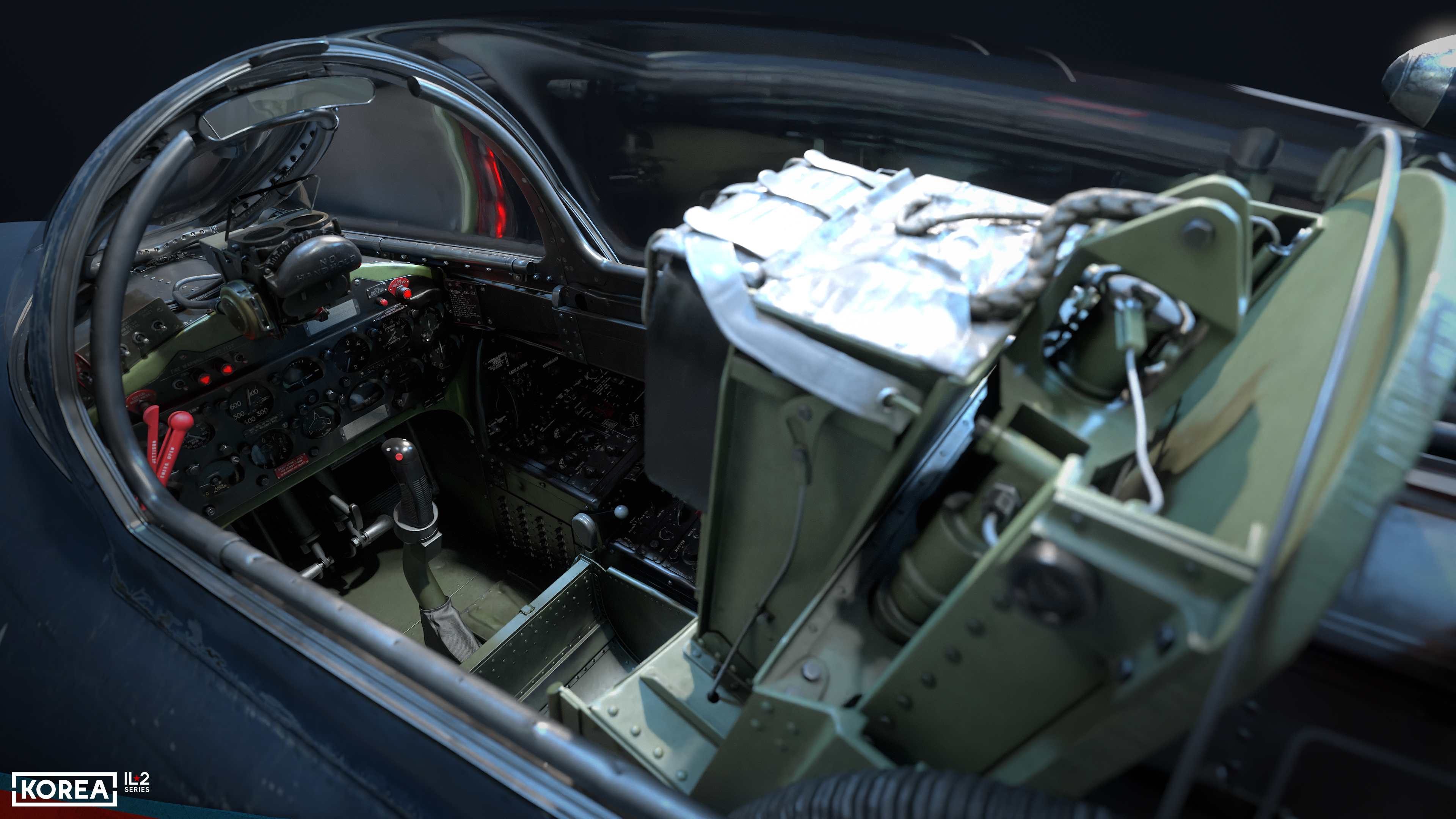
As a carrier-based aircraft, the Panther was designed under strict dimensional constraints imposed by carrier operations. Its fuselage was more compact, and its cockpit noticeably narrower than, for example, that of the F-86 Sabre. Pilots noted that there was very little room around their shoulders and elbows inside the Panther, with the instrument panels positioned closer to them.
Compared with the Sabre, there was also less headroom and poorer rearward visibility. Both were consequences of the more streamlined canopy, which sat lower and blended more closely into the fuselage contours.
As usual, we'll begin our tour of the cockpit instruments at the front—with the gunsight.
Compared with the Sabre, there was also less headroom and poorer rearward visibility. Both were consequences of the more streamlined canopy, which sat lower and blended more closely into the fuselage contours.
As usual, we'll begin our tour of the cockpit instruments at the front—with the gunsight.
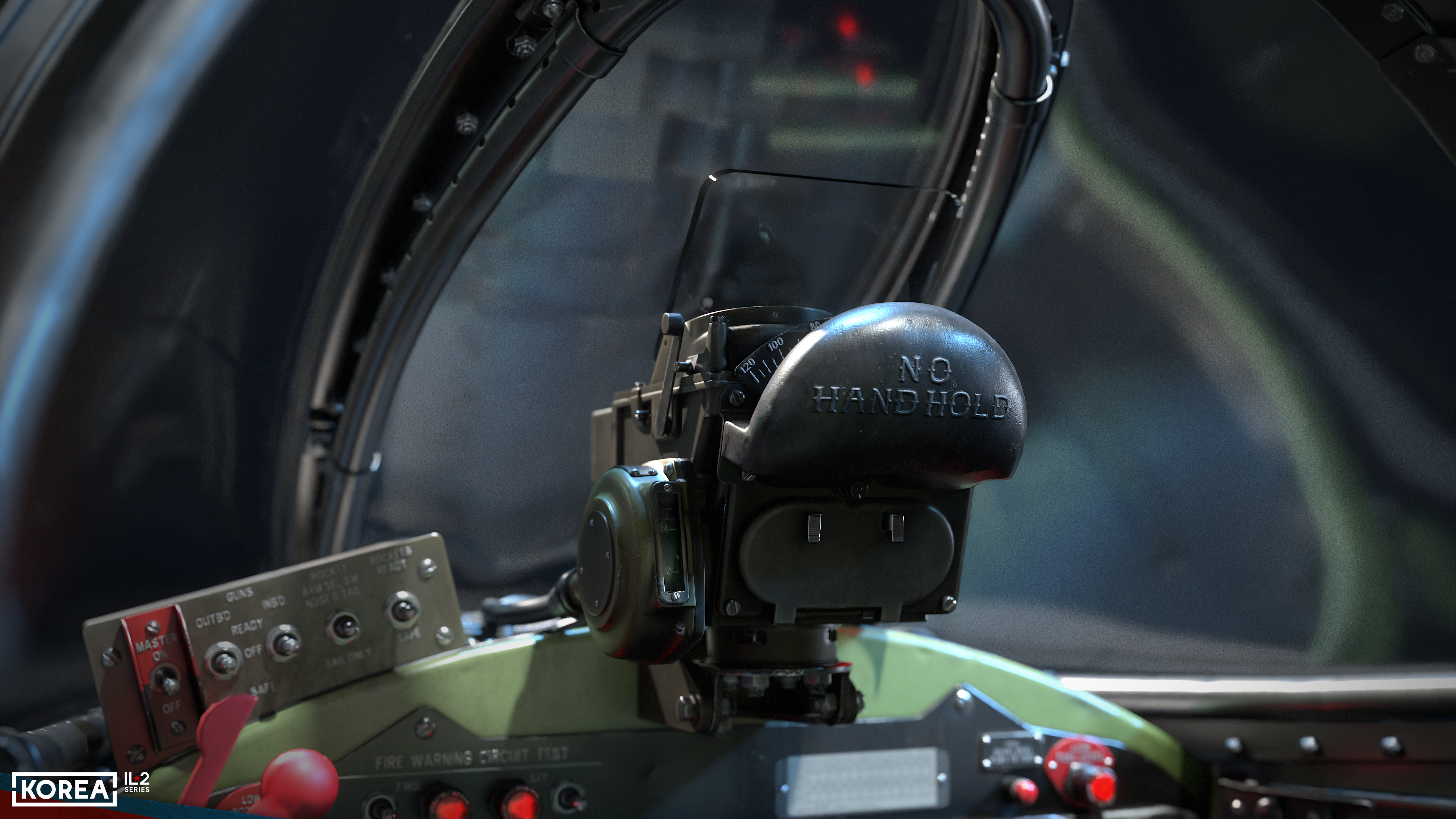
The familiar outlines of the K-14 gunsight are easy to recognize. This sight was widely fitted to World War II piston-engined aircraft, including the F-51 Mustang.
However, the Panther's sight also had several features typical of naval aviation gunsights. Its range-adjustment drum was enclosed in a housing, and its rotation was transmitted through a special flexible shaft rather than a cable.
It also had different ballistic settings designed for 20 mm cannons. This version was designated the Mark 8. In addition, the sight allowed the pilot to switch the reticle between modes for fixed forward-firing weapons and external ordnance.
To the left of the gunsight, on the glare shield above the instrument panel, was the armament control panel. Depending on the aircraft variant, it controlled both the fixed forward-firing armament and externally carried weapons.
A magnetic compass was positioned on the right.
Looking down and slightly to the left, you can easily spot two forked handles. These were easily the most conspicuous features in the entire cockpit, and they operated in a rather interesting way. Both handles were used to open the canopy.
The smaller one, white with a red tab, was used to open and close the canopy under normal conditions. In an emergency, the red tab on this handle allowed the pilot to jettison the canopy using the hydraulic system.
If the hydraulic system failed for any reason, however, the canopy could be jettisoned using a backup supply of compressed air. This was controlled by the second, larger handle. It also had two operating modes: emergency opening and emergency jettison.
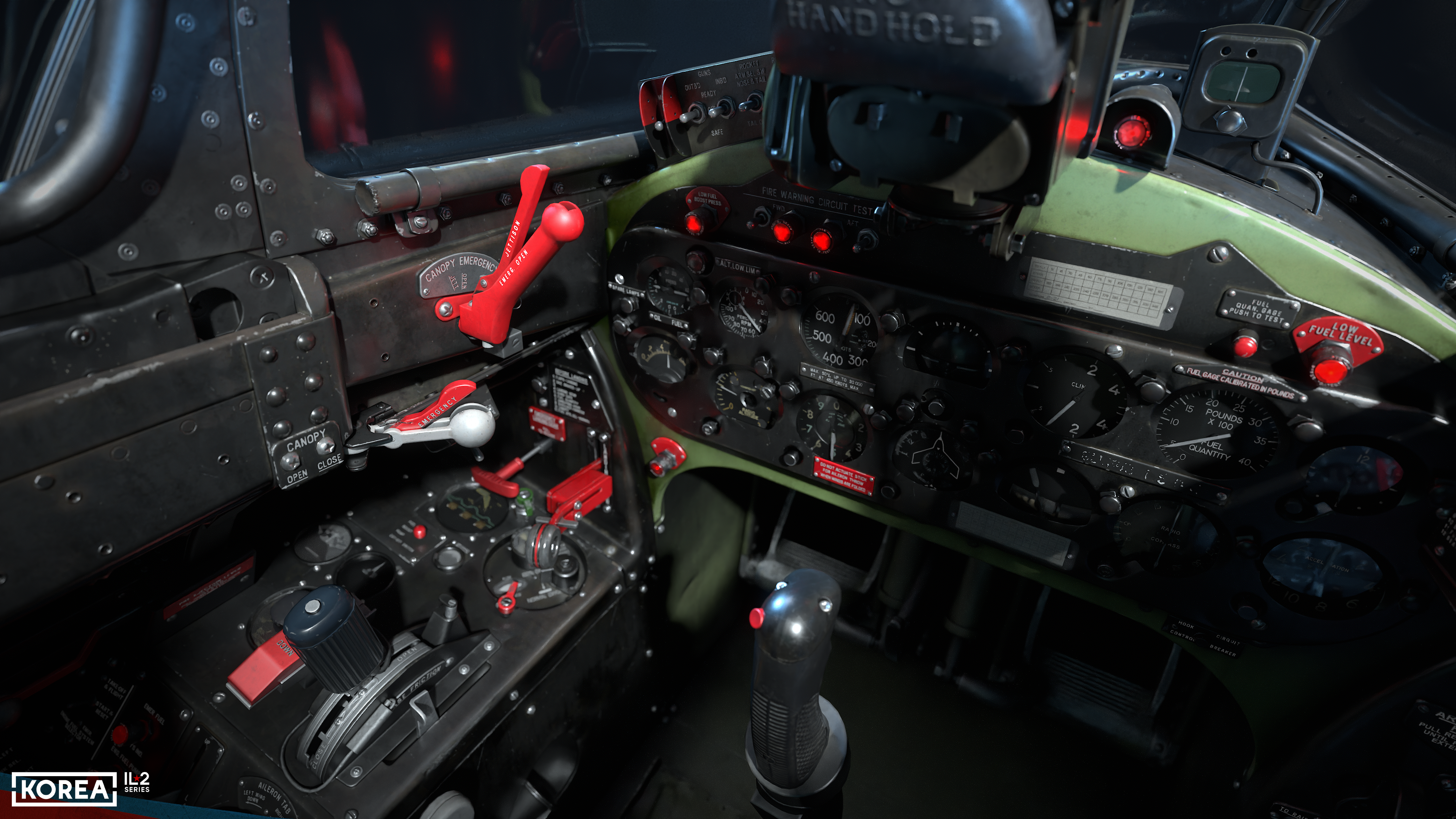
While we're on the subject of emergency controls, we should also mention the T-shaped emergency landing gear extension handle, located a little farther down.
In general, the Panther's controls were grouped quite logically.
On the central instrument panel in front of the pilot were familiar instruments such as the airspeed indicator, vertical speed indicator, and other flight and navigation instruments found in most of the aircraft in our project. There's little point in going through them all in detail again.
Perhaps the only one worth mentioning is the remote compass indicator, which looked quite different from the compasses used in land-based aircraft.
Another interesting feature of the Panther's central instrument panel—one that had also become characteristic of naval aviation from the second half of World War II onward—was indirect instrument lighting.
Unlike on land-based aircraft, an additional panel fitted with lamps was mounted over the instrument panel. These lamps illuminated the space between the two panels, providing lighting for the instruments.
If you look closely at the panel, you'll see numerous identical protrusions that resemble bolts—these are the lamp sockets. You may recognize this type of lighting from Soviet aircraft of World War II, such as the LaGG-3 and La-5, which used a similar system.
And the last noteworthy feature of the central panel is the tail hook control handle, used for carrier landings. You can see it on the right-hand side.
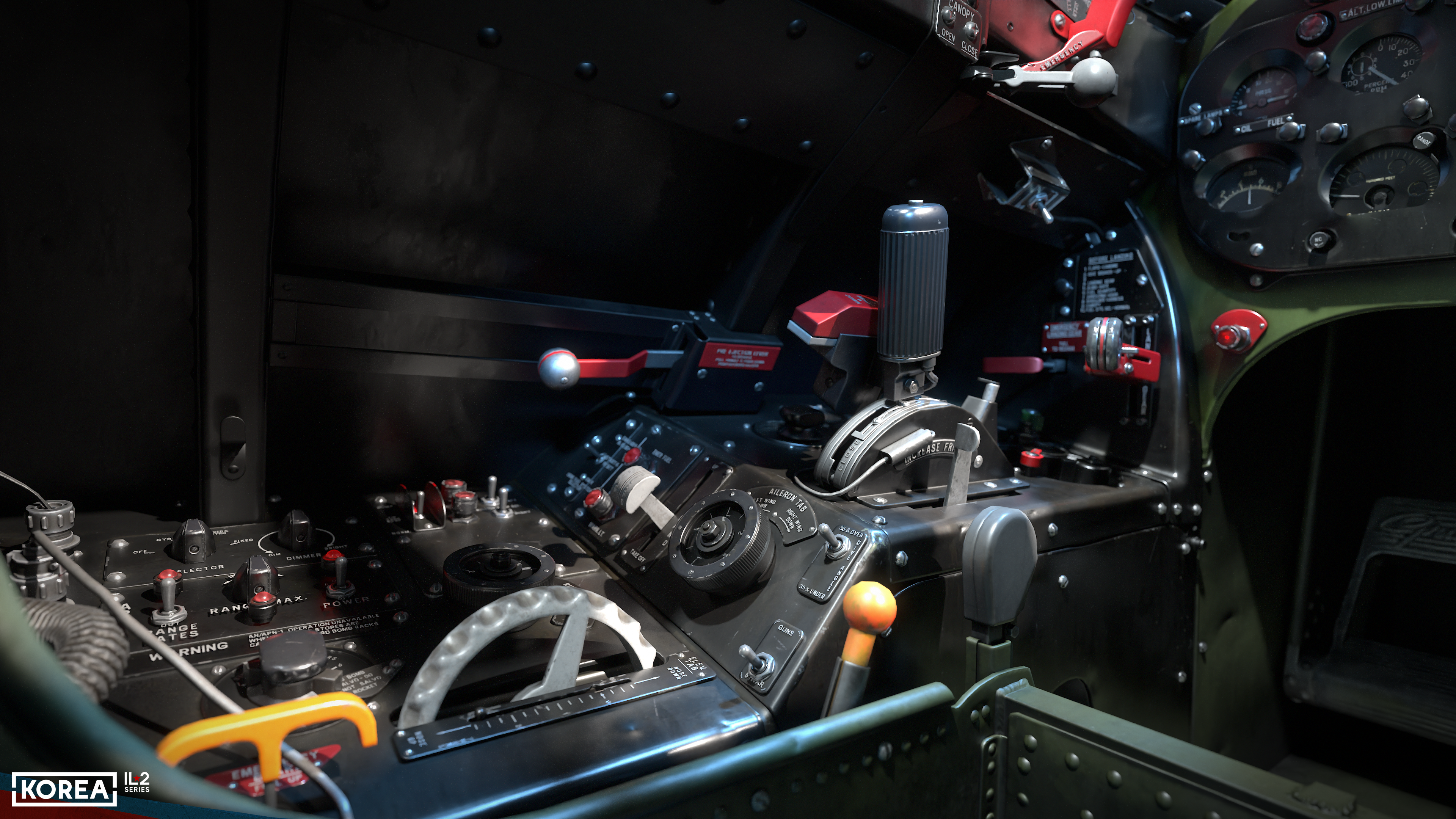
The left console housed the throttle, indicators for the aircraft's high-lift devices, and controls for the flaps, landing gear, and trim tabs, as you'd expect. It also housed the diluter demand oxygen regulator, which controlled the oxygen supply to the pilot.
There were also gauges showing the quantity and pressure of the water used to boost engine power.
Slightly lower and farther aft was a red emergency brake handle. This console also housed an emergency handle for returning the ejection seat to its proper position for ejection, along with some of the fuel system controls.
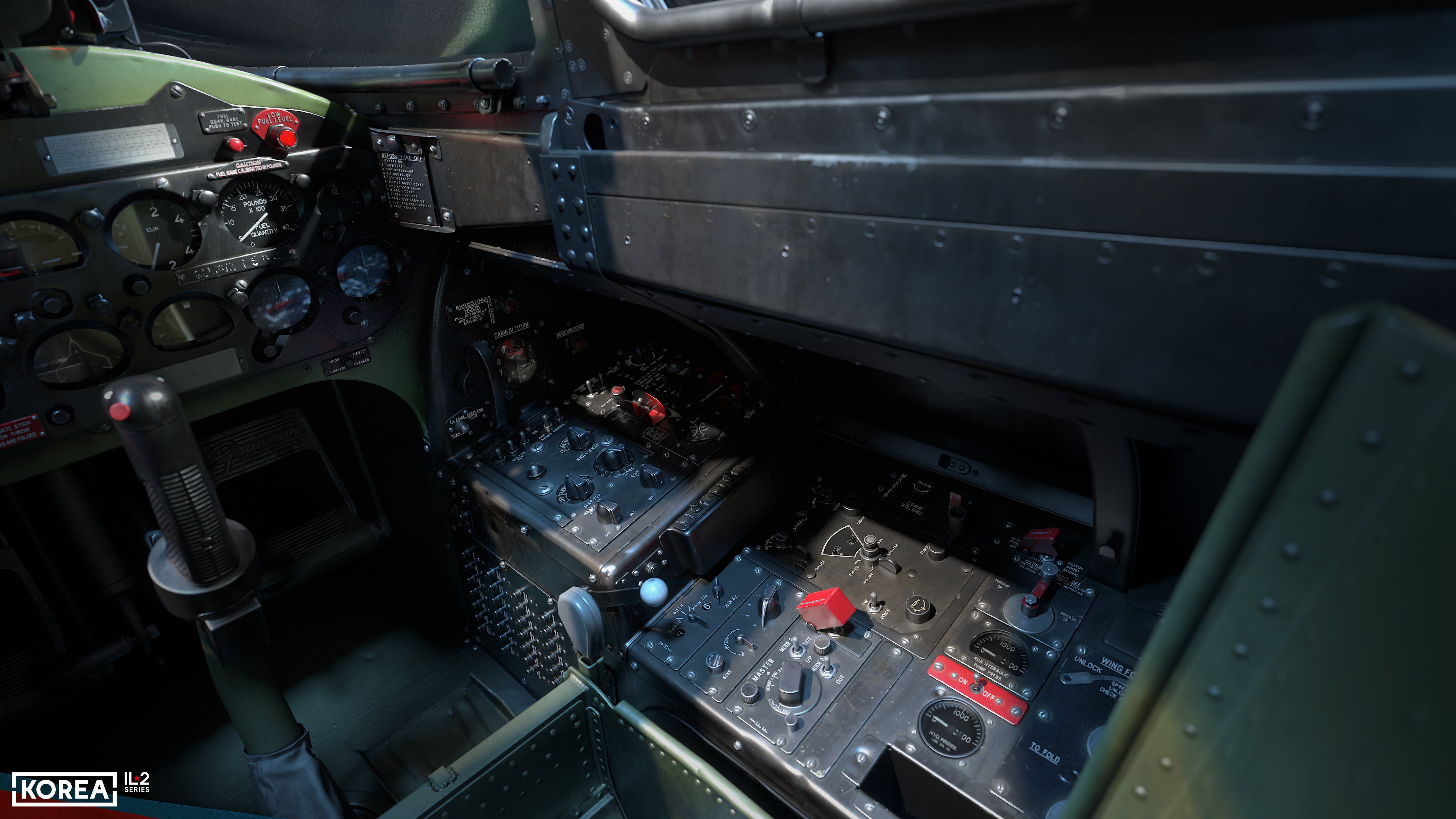
The remaining fuel system controls were located on the right-hand side. Also on the right were the electrical system and cockpit lighting controls.
A bank of circuit breakers was mounted on the vertical sidewall, while the horizontal console housed controls for various radio systems: the radio compass, communications radio, and identification friend or foe (IFF) transponder.
A pair of hydraulic pressure gauges was located there as well.
Farther aft on the same side were additional controls unique to carrier-based aircraft: the wing-fold controls, essential when space aboard an aircraft carrier is very limited.
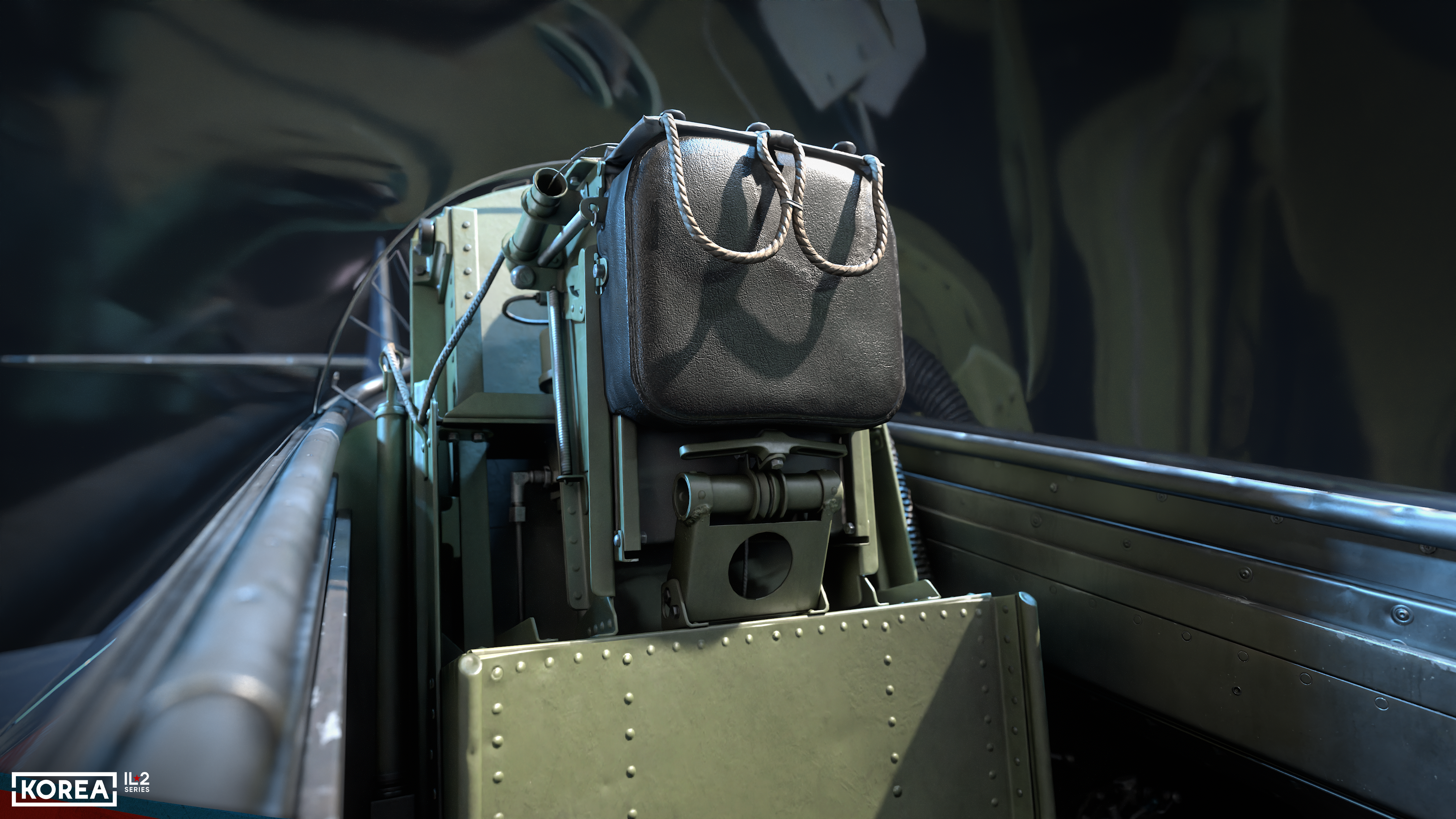
Behind the pilot, on the canopy glazing, was the radio compass's sense antenna, similar to those found on other aircraft of the Blue side.
Another interesting feature of this aircraft was the placement of the ejection handles, which resembled ropes on a sailing ship, at the top of the headrest. To eject, the pilot pulled the handles downward, drawing a special face curtain out of the headrest to shield his face from the oncoming airflow.
Another interesting feature of this aircraft was the placement of the ejection handles, which resembled ropes on a sailing ship, at the top of the headrest. To eject, the pilot pulled the handles downward, drawing a special face curtain out of the headrest to shield his face from the oncoming airflow.
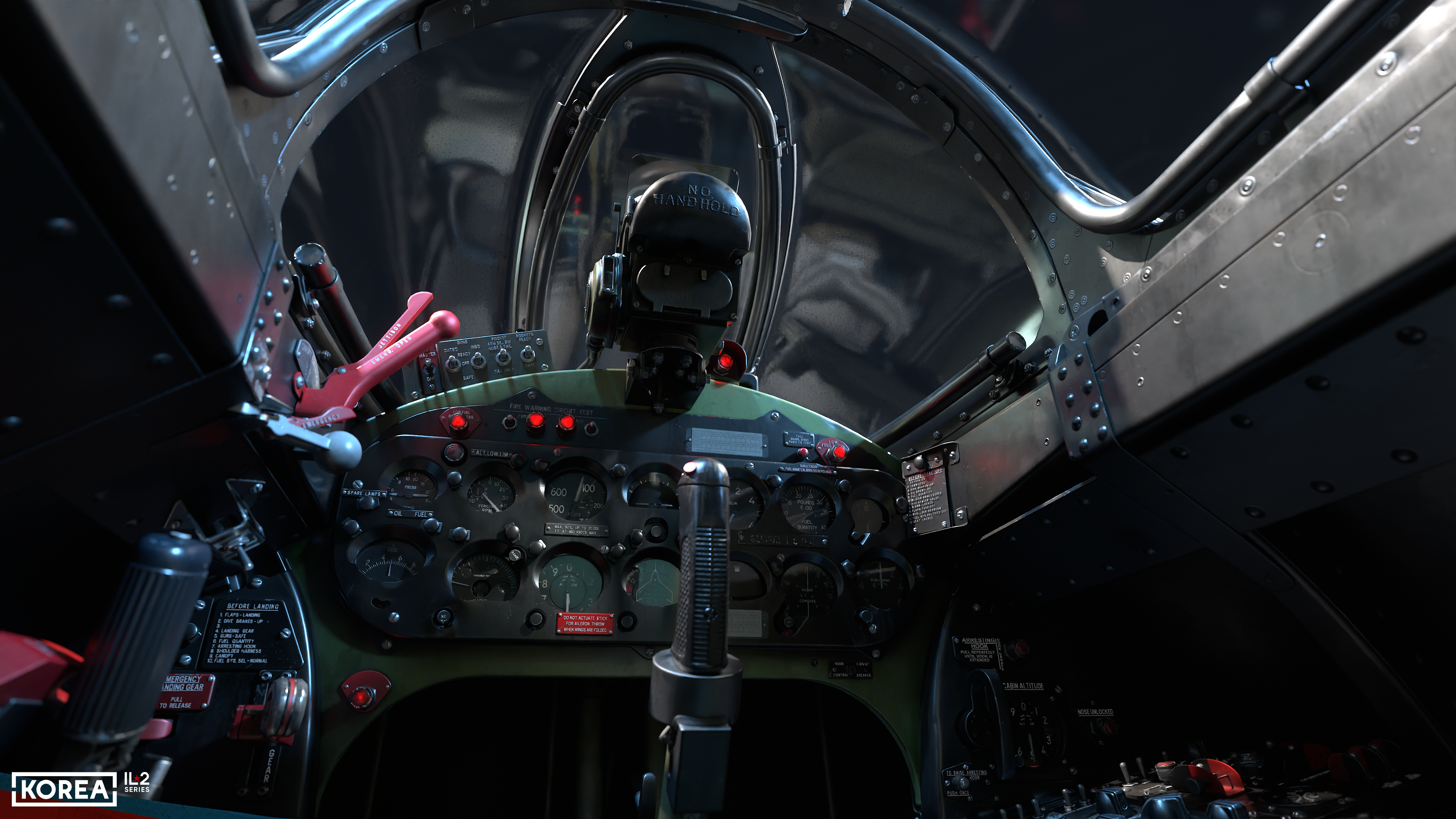
And that concludes our look at the cockpit of the first carrier-based aircraft in Korea. Although many of its features will be familiar from other aircraft already in the game, it has some interesting distinguishing characteristics unique to this new type of operation.
For more on these distinctive features and, more generally, all the work involved in bringing something as exciting as carrier aviation to the simulator, keep following our Dev Blogs.
The further we go, the more exciting things get.
For more on these distinctive features and, more generally, all the work involved in bringing something as exciting as carrier aviation to the simulator, keep following our Dev Blogs.
The further we go, the more exciting things get.
To make sure you do not miss future stories, we would also like to remind you of our other communication channels, which some of you may find more convenient: Discord, Facebook, YouTube, Reddit, and X.
Please subscribe, share the news with your comrades, join the discussion, and ask questions.
Stay tuned! Good hunting!
Please subscribe, share the news with your comrades, join the discussion, and ask questions.
Stay tuned! Good hunting!