


Dev Blog #88
Greetings, comrades!
Today, we are starting a new topic in the Korea Dev Blogs and would like to tell you about the Deck Ops expansion. As we mentioned in our article about the IL-2 series roadmap, it will feature five carrier-based aircraft from the Korean War and an aircraft carrier with everything needed for carrier operations.
There is no way to cover everything in detail in a single issue. Each aircraft and the carrier have many interesting features, along with new gameplay possibilities. So, we have divided this topic into several chapters and will start with the aircraft.
Today, we are starting a new topic in the Korea Dev Blogs and would like to tell you about the Deck Ops expansion. As we mentioned in our article about the IL-2 series roadmap, it will feature five carrier-based aircraft from the Korean War and an aircraft carrier with everything needed for carrier operations.
There is no way to cover everything in detail in a single issue. Each aircraft and the carrier have many interesting features, along with new gameplay possibilities. So, we have divided this topic into several chapters and will start with the aircraft.
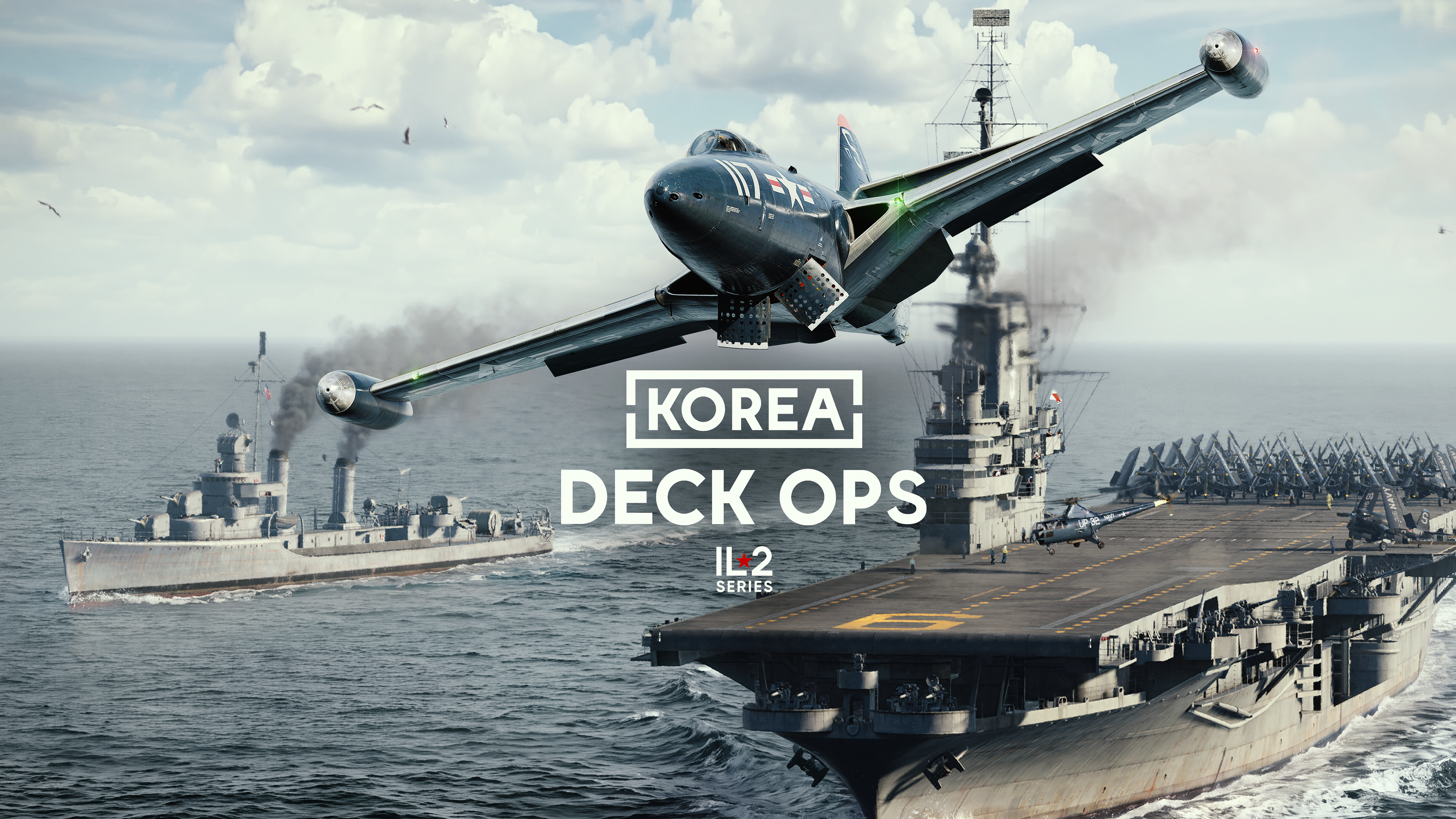
Today, our main character is the aircraft that will become the “face of the expansion”: the Grumman F9F-2 Panther, the first carrier-based jet fighter to see combat.
Formally, it was preceded by the FH Phantom, but the Phantom never took part in air combat and was more of an experimental series of carrier-based aircraft. It was the Panther that ushered in the era of carrier-based jet combat. The XF9F-2 prototype first flew in November 1947, made its first carrier landing in early 1949, and entered service in May of that same year. In this Dev Blog, you can also enjoy screenshots of this beauty in full 4K resolution, examine its details, and see how it looks in the game.
Formally, it was preceded by the FH Phantom, but the Phantom never took part in air combat and was more of an experimental series of carrier-based aircraft. It was the Panther that ushered in the era of carrier-based jet combat. The XF9F-2 prototype first flew in November 1947, made its first carrier landing in early 1949, and entered service in May of that same year. In this Dev Blog, you can also enjoy screenshots of this beauty in full 4K resolution, examine its details, and see how it looks in the game.
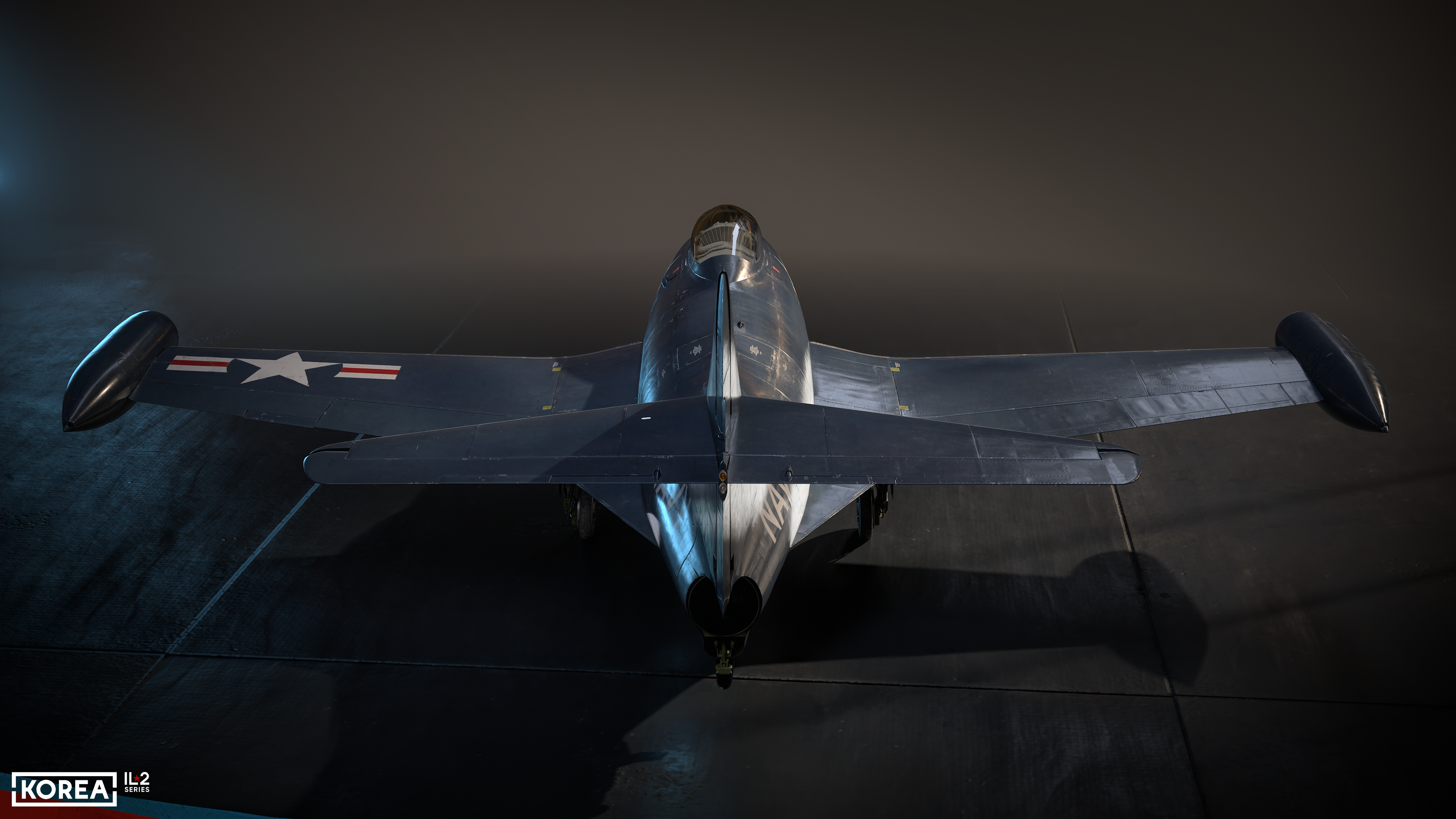
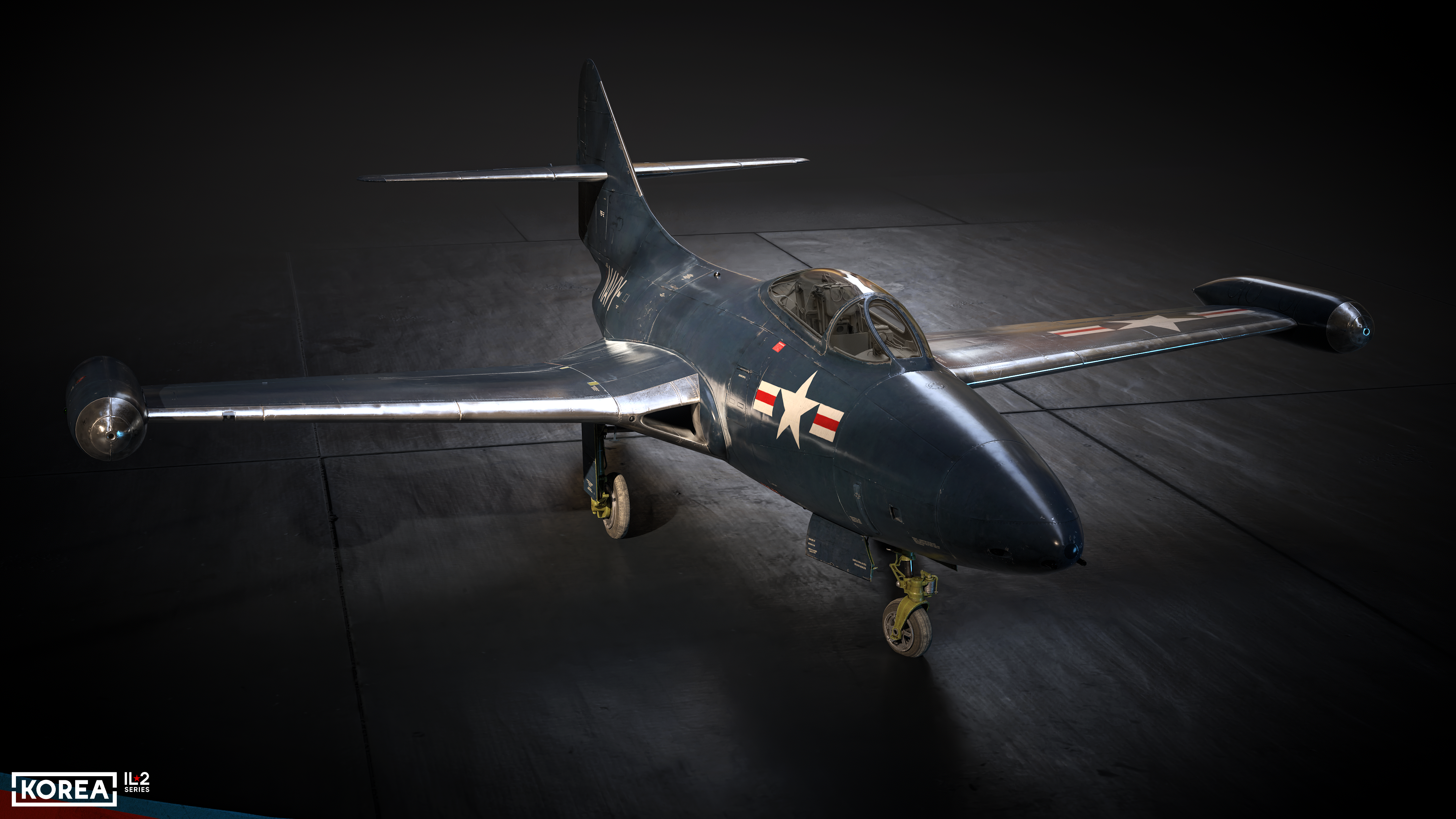
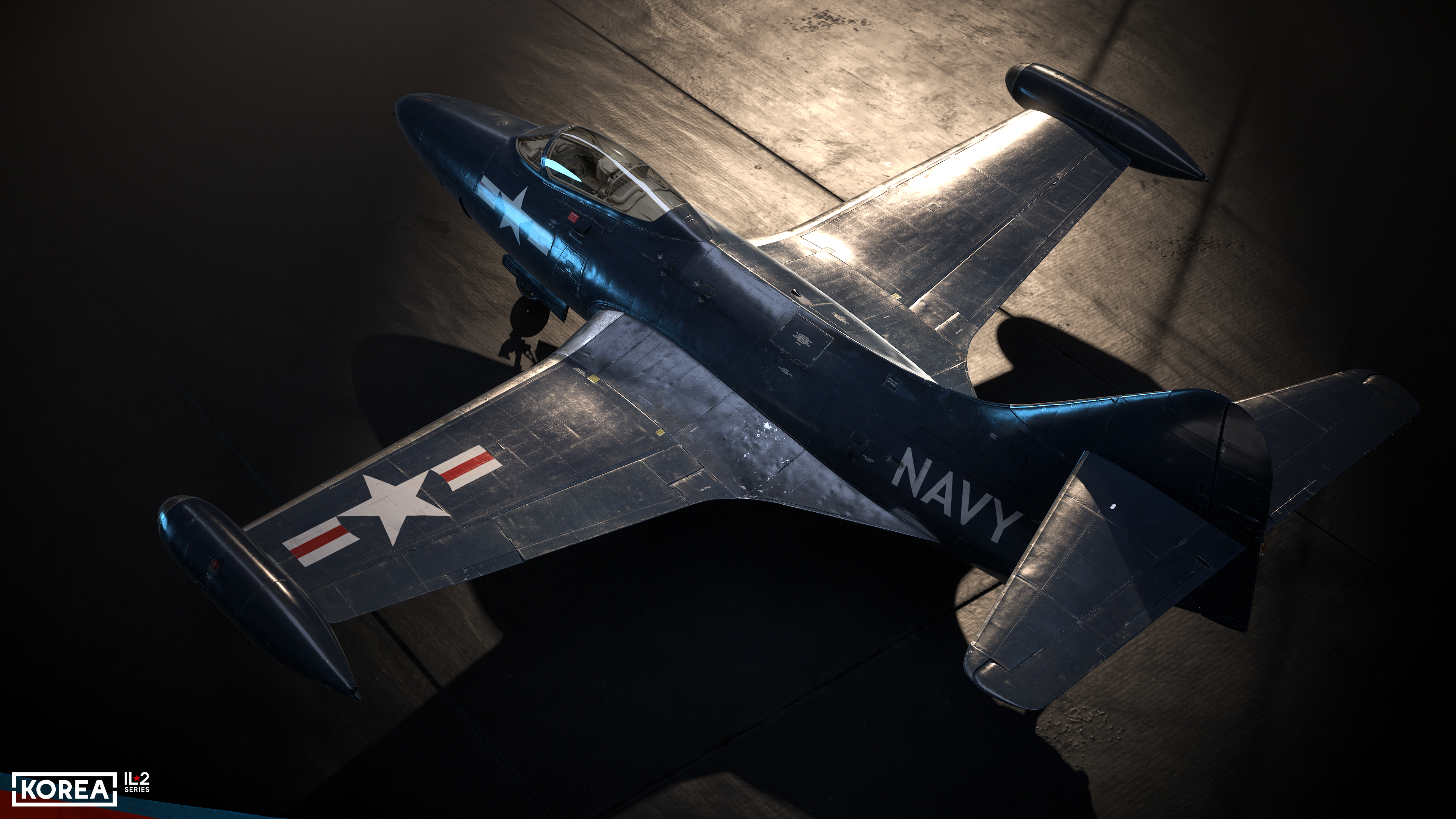
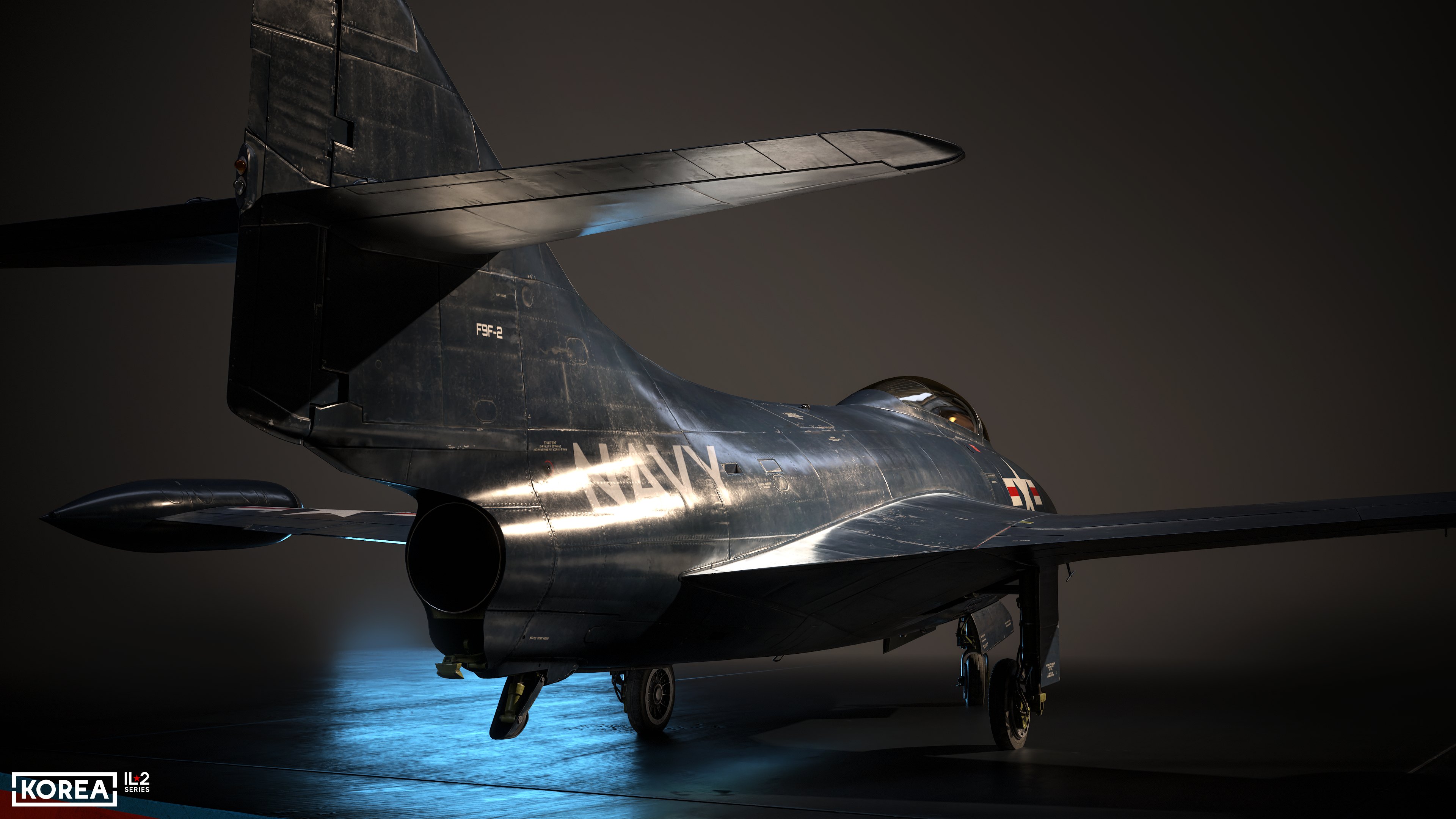
The Panther is a single-engine aircraft powered by the Pratt & Whitney J42-P-8, which, like the engine used by the MiG-15, was a licensed version of the British Rolls-Royce Nene. The air intakes were placed in an unusual way: in the wing roots, without a boundary-layer bleed system. This is a clear sign of an early design typical of first-generation jet aircraft. The aircraft’s fin is also interesting: it is integrated with the fuselage, with no noticeable seam. The T-tail horizontal stabilizer sits well above the wing, which improved its effectiveness under normal flight conditions.
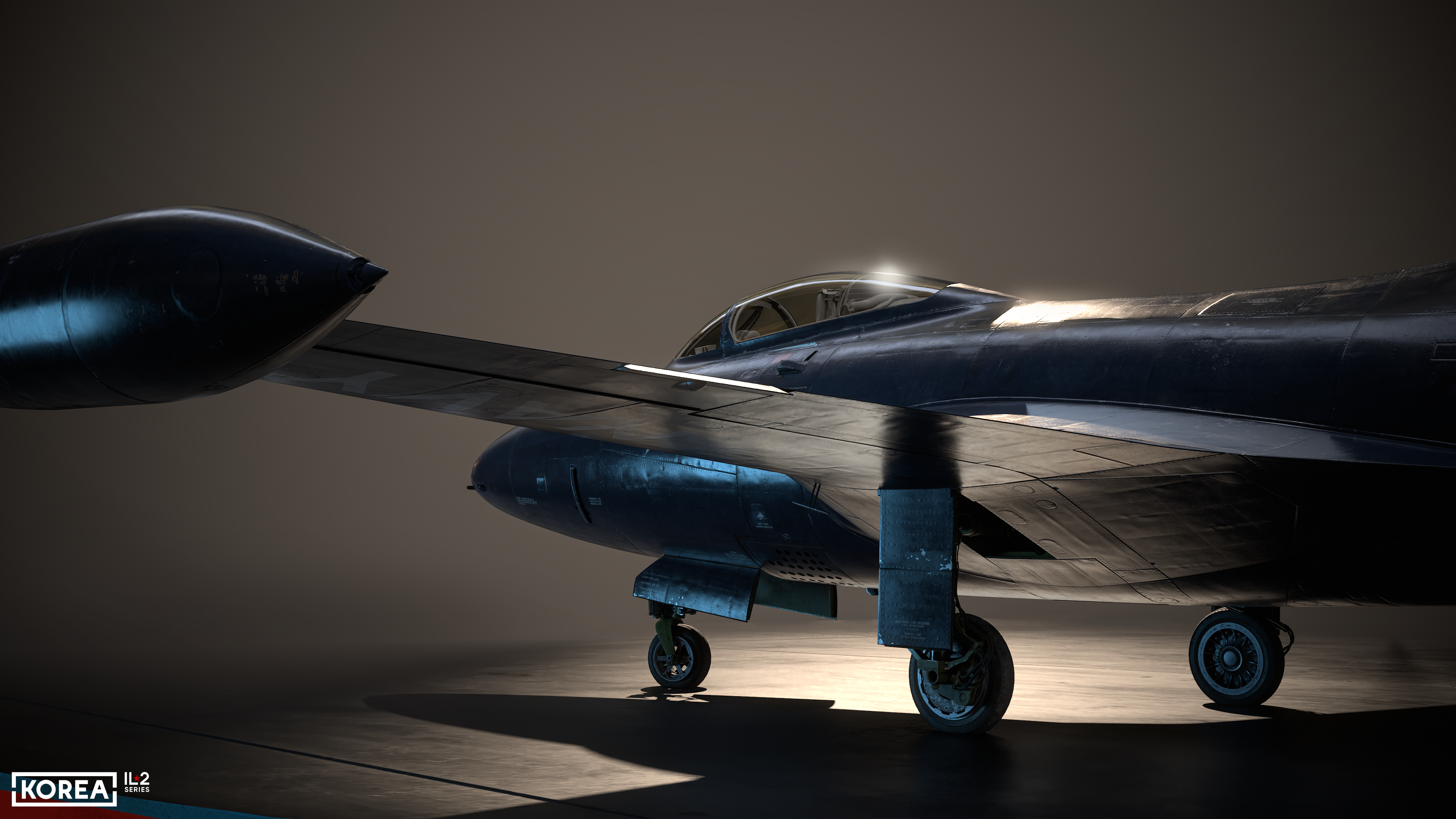
The wings folded using a hydraulic mechanism controlled from the cockpit. Wingtip fuel tanks were fitted as standard and could not be jettisoned. They could, however, be removed on the ground, which was occasionally done. On the F9F-2B modification, which appeared after the start of combat operations in Korea, three hardpoints under each folding outer wing panel could carry HVAR or ATAR rockets, or bombs weighing up to 250 pounds. A little later, another modification added two pylons closer to the wing-fold mechanism. Each could carry up to 1,000 pounds of ordnance.
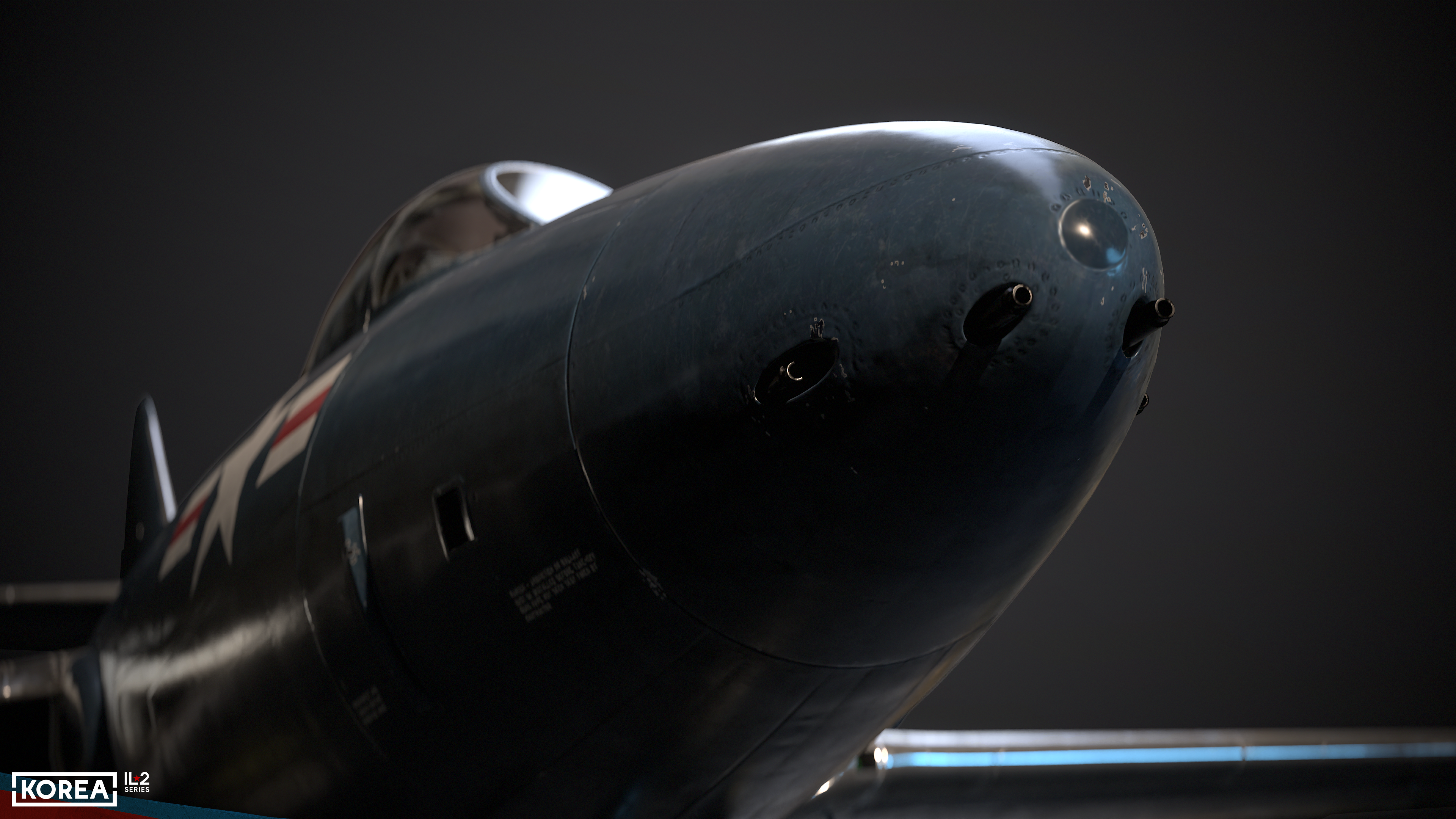
The forward-firing armament consisted of four 20 mm M3 automatic cannons with a rate of fire of up to 800 rounds per minute. Their shells were broadly comparable in performance to their British counterparts and had considerable destructive power. The cannons were mounted together in a single battery in the nose, with 200 rounds per gun.
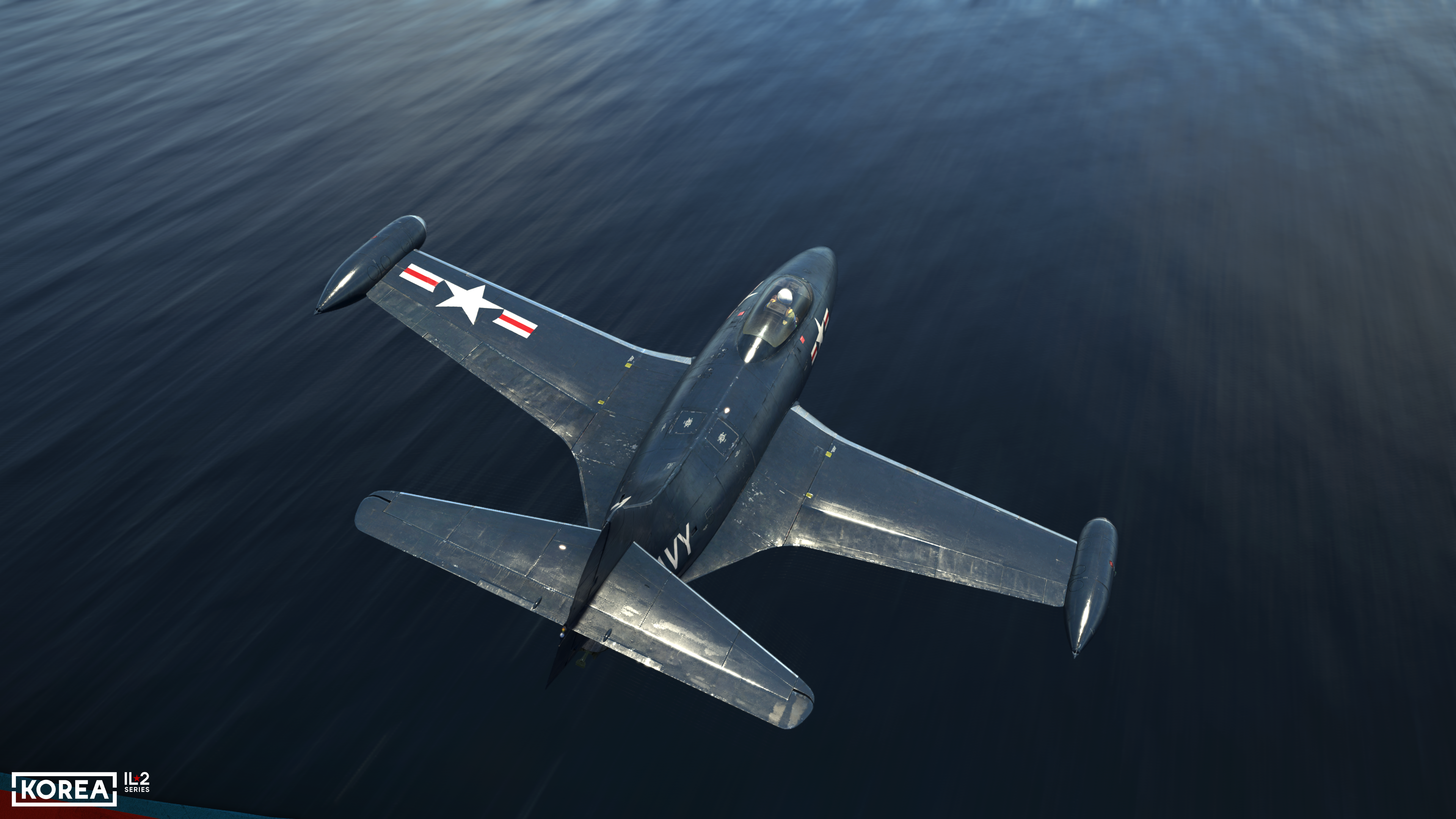
The aircraft carried 923 gallons of fuel and had a combat radius of up to 400 nautical miles. It could climb to an altitude of up to 13 kilometers and reach a level-flight speed of up to 925 km/h. This made the Panther the Navy and Marine Corps counterpart to the Shooting Star, with roughly comparable capabilities. In the conditions of the Korean War, this meant that it was primarily a ground-attack aircraft. It was used by both the U.S. Navy and the Marine Corps. Navy aircraft operated mainly from carriers, while Marine aircraft flew from land bases. All of these roles will be represented in Deck Ops, which will feature two Marine Corps squadrons and ten Navy squadrons that flew Panthers in combat.
In the roadmap, we briefly mentioned that Neil Armstrong, the first man to set foot on the Moon, flew this aircraft during the Korean War. In this Dev Blog, we would like to tell you a little more about it. Although Armstrong had no aerial victories to his name, since his missions mainly involved attacks on ground targets, he flew 78 combat sorties on ground-attack missions.
This is important to us because IL-2 is a project devoted not only to air combat, but also to ground attack. After all, ground attack is at the heart of the aircraft that gave our beloved series its name. Most of Armstrong’s sorties took place in the second half of 1951. During his service, Armstrong received the Air Medal and Gold Stars for his combat service. On September 3, 1951, during a reconnaissance flight, his aircraft was hit by ground fire. While trying to regain control, the aircraft struck a telegraph pole and lost part of its wing. Armstrong managed to reach territory held by friendly forces and ejected, as that was the only safe option.
The incident occurred right at the beginning of Neil’s combat service. He went on to fly many more sorties afterward, which speaks to the aircraft’s high reliability — especially considering that he was able to reach friendly territory despite the damage. Over the course of the Korean War, the Panther earned a reputation as a highly reliable and effective ground-attack aircraft.
The incident occurred right at the beginning of Neil’s combat service. He went on to fly many more sorties afterward, which speaks to the aircraft’s high reliability — especially considering that he was able to reach friendly territory despite the damage. Over the course of the Korean War, the Panther earned a reputation as a highly reliable and effective ground-attack aircraft.
It is also worth noting that the F9F-2 Panther was the first jet aircraft flown by the famous Blue Angels demonstration team. The corresponding livery will be included in the game as part of the appropriate skin pack.

In future Dev Blogs, we will tell you more about the F9F-2’s instruments and systems, the other aircraft included in Deck Ops, and the aircraft carrier — the largest object a player has ever been able to interact with in the IL-2 series.