


Dev Blog #92
Greetings, comrades!
In November, we plan to release a major update for Korea, featuring a wide range of improvements and refinements. Some of these will be particularly substantial and significant. In addition to graphics improvements, new mission types in Career and Task Editor, and map enhancements, we have two major new features planned. Those are what we'd like to talk about today.
Our first new feature is an in-game player ranking system with a continuously updated leaderboard. Developing such a system is quite a challenge: you have to compare and weigh a wide variety of achievements against one another. But our team includes quite a few experienced IL-2 players, including members of the Flying Barans squadron, whose experience helped us find a solution.
The leaderboard will be divided by game type: achievements in battles against AI opponents—PvE (Career, Task Editor, co-op, and official campaigns)—and achievements in battles against other players—PvP, which in our case means Dogfight. Each of these two modes will also be divided into difficulty categories. Your statistics will count toward the appropriate category based on the mission's difficulty settings.
If you're already playing Korea (and if you're not, what are you waiting for?), you've probably noticed the bar displayed when selecting mission difficulty settings. It has four ranges: "Full real," "Hard," "Normal," and "No rating." This bar indicates which player ranking category your statistics for that mission will count toward.
Rankings will be calculated over each calendar month. At the beginning of every new month, the standings will reset. However, the ranking history for the previous twelve months will remain available for viewing.
Rankings will be calculated over each calendar month. At the beginning of every new month, the standings will reset. However, the ranking history for the previous twelve months will remain available for viewing.
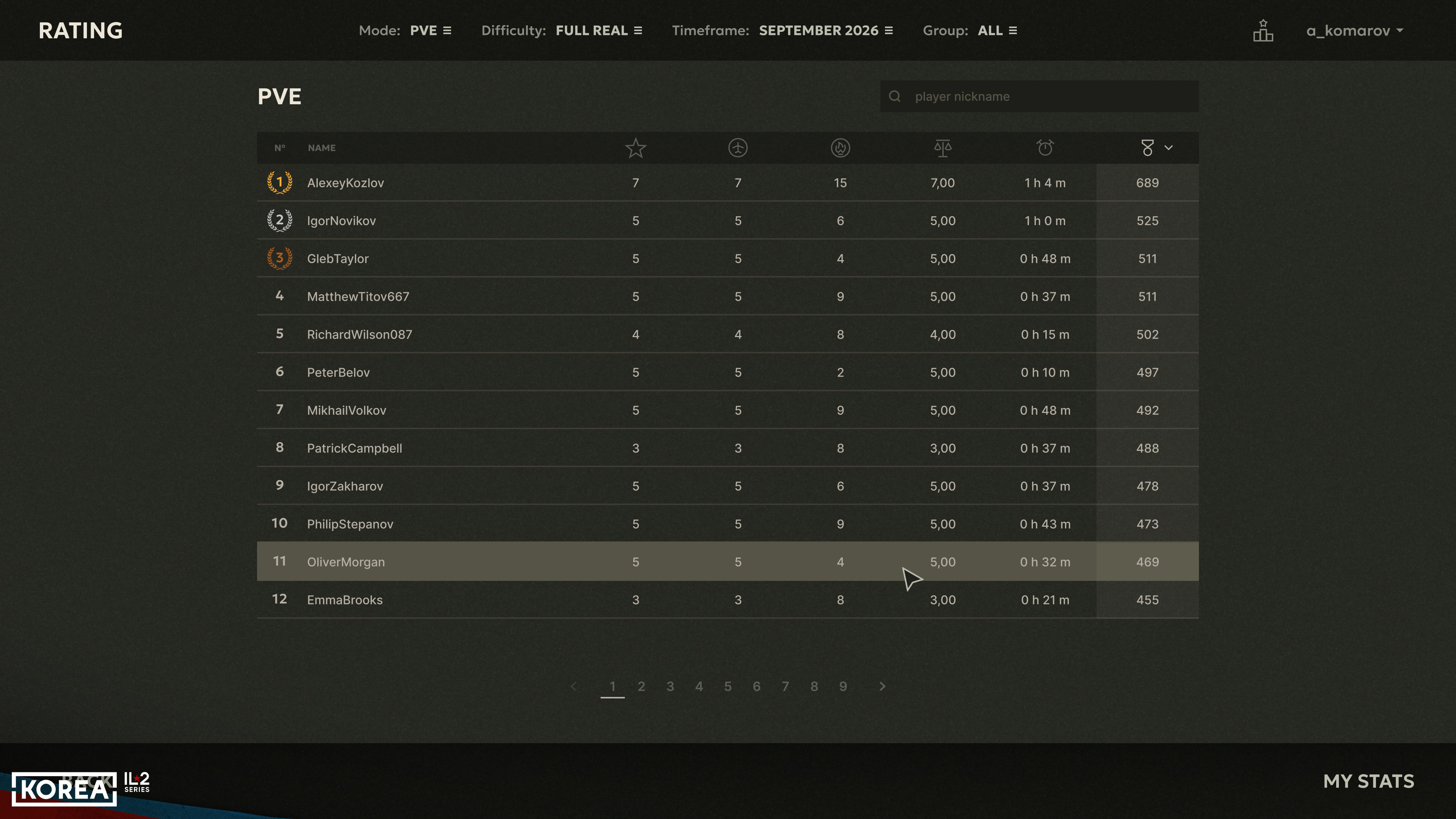
The leaderboard will feature a search function to find players by name or nickname, as well as a friend filter that lets you display only players you've added as friends. Naturally, you'll also be able to opt out of the global leaderboard in your player profile settings.
Players who own the Steam version of the game will need to link their Steam account to an IL-2 account to participate in the rankings. You can do this through your profile on our website, il2-series.com.
The main measure is rating points, which determine a player's position on the leaderboard. The number of points earned depends on how many tasks you've successfully completed, aircraft you've shot down, and enemy targets you've destroyed. Each class of target carries a different “weight.”
Besides the default sorting by leaderboard position, you'll also be able to sort the table by other statistics: aircraft shot down, ground vehicles destroyed, flight time, and streak—a crucial statistic in multiplayer battles.
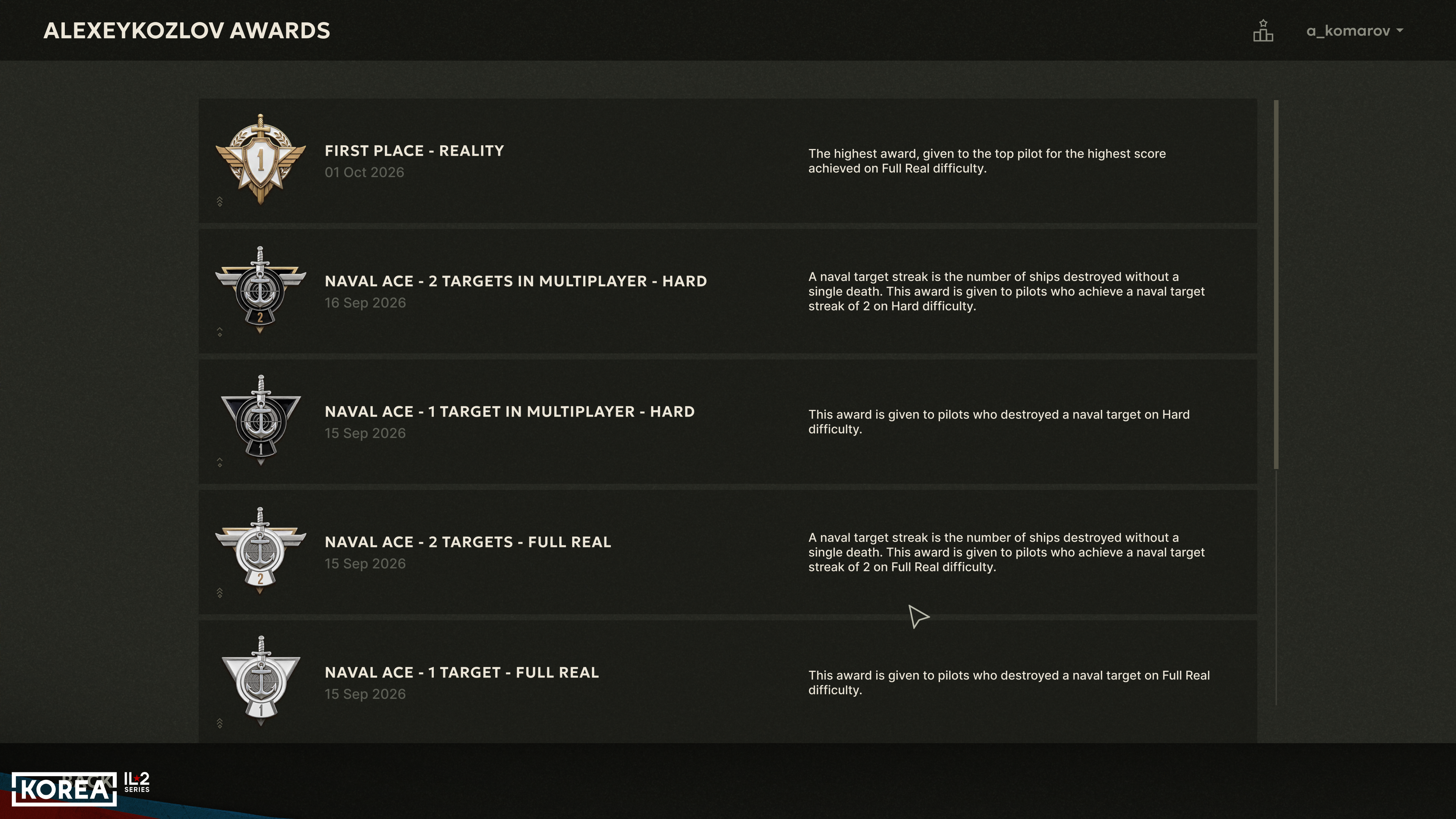
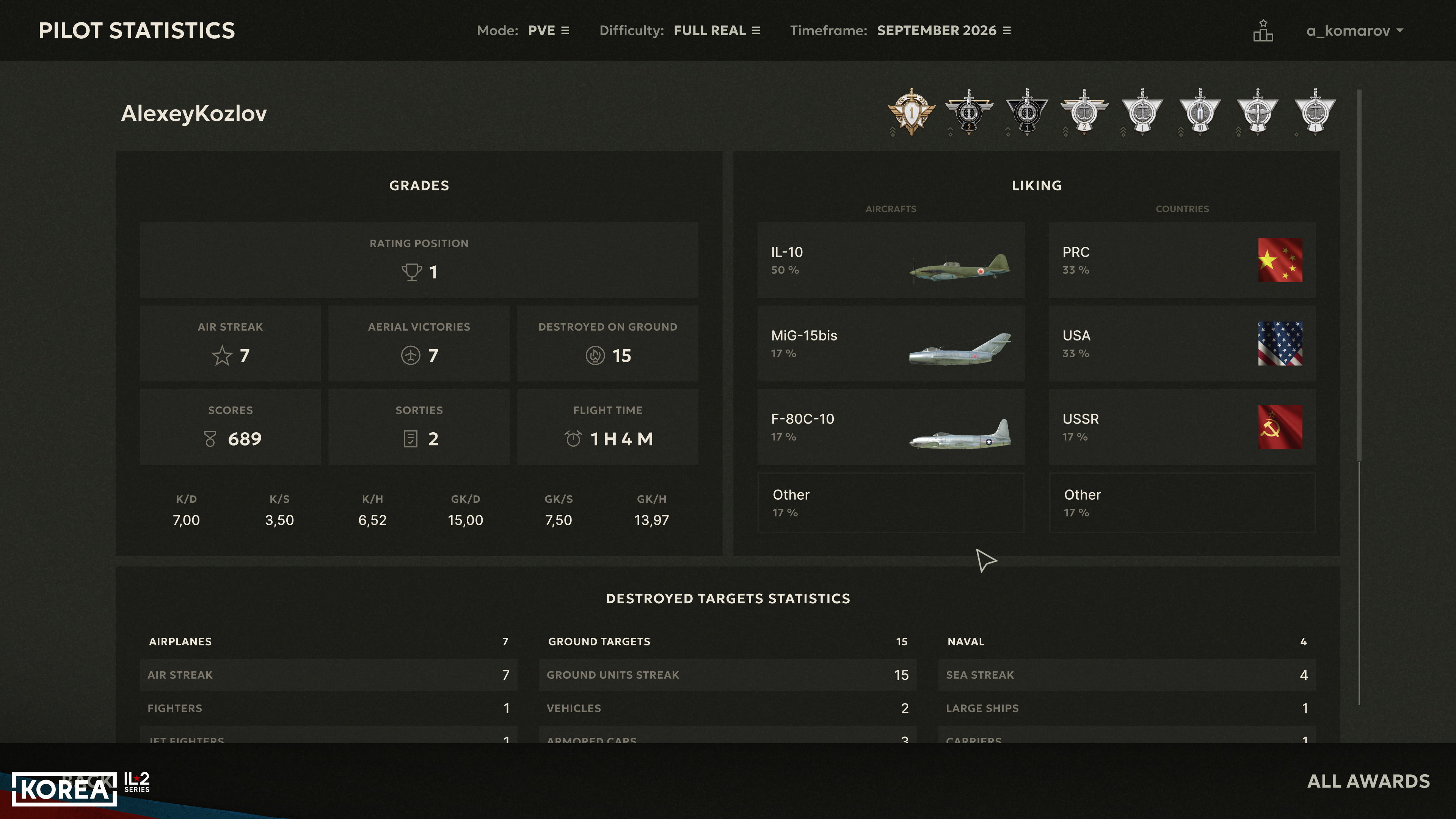
In addition to the leaderboard itself, the ranking system will let you view a detailed achievement card for each player. It will show a breakdown of kills by target category and additional statistics, including K/S, K/D, GK/D, and others. The card will also contain information about awards and favorite aircraft.
All in all, the player ranking system is a fairly large-scale and complex tool for social interaction and competition among players.
We planned this system from the very beginning of Korea's development, but we couldn't complete everything in time for release, so we had to postpone this feature until after launch. Now we're continuing to deliver on our plans: the leaderboard will become available to players in the upcoming Update 1.006.
Our second new feature is an improved wingman command dialog. This is the menu players use to give orders to their AI wingmen. For a long time, it has had one fundamental problem.
Decision-making for an individual AI pilot is a complex process that depends on many factors: the mission scenario, the player's commands, the tactical situation in the air and on the ground, the aircraft's condition, remaining fuel and ammunition, and much more.
For example, an AI-controlled aircraft may receive the player's "Cover me" command while it is itself under direct attack by an enemy. It must first evade the attack before it can start carrying out the order. Or the player might order a wingman to attack ground targets when that wingman is already returning to base because its fuel reserves have dropped below a critical level, making it impossible to comply.
In a real flight, situations like these can be clarified through radio communications. As we've discussed in previous Dev Blogs, we're working to expand the possibilities of in-game radio communications as much as possible, but there are limitations. After all, it isn't just about what a wingman reports: it's also about whether the flight leader can ask a follow-up question over the radio and receive an answer.
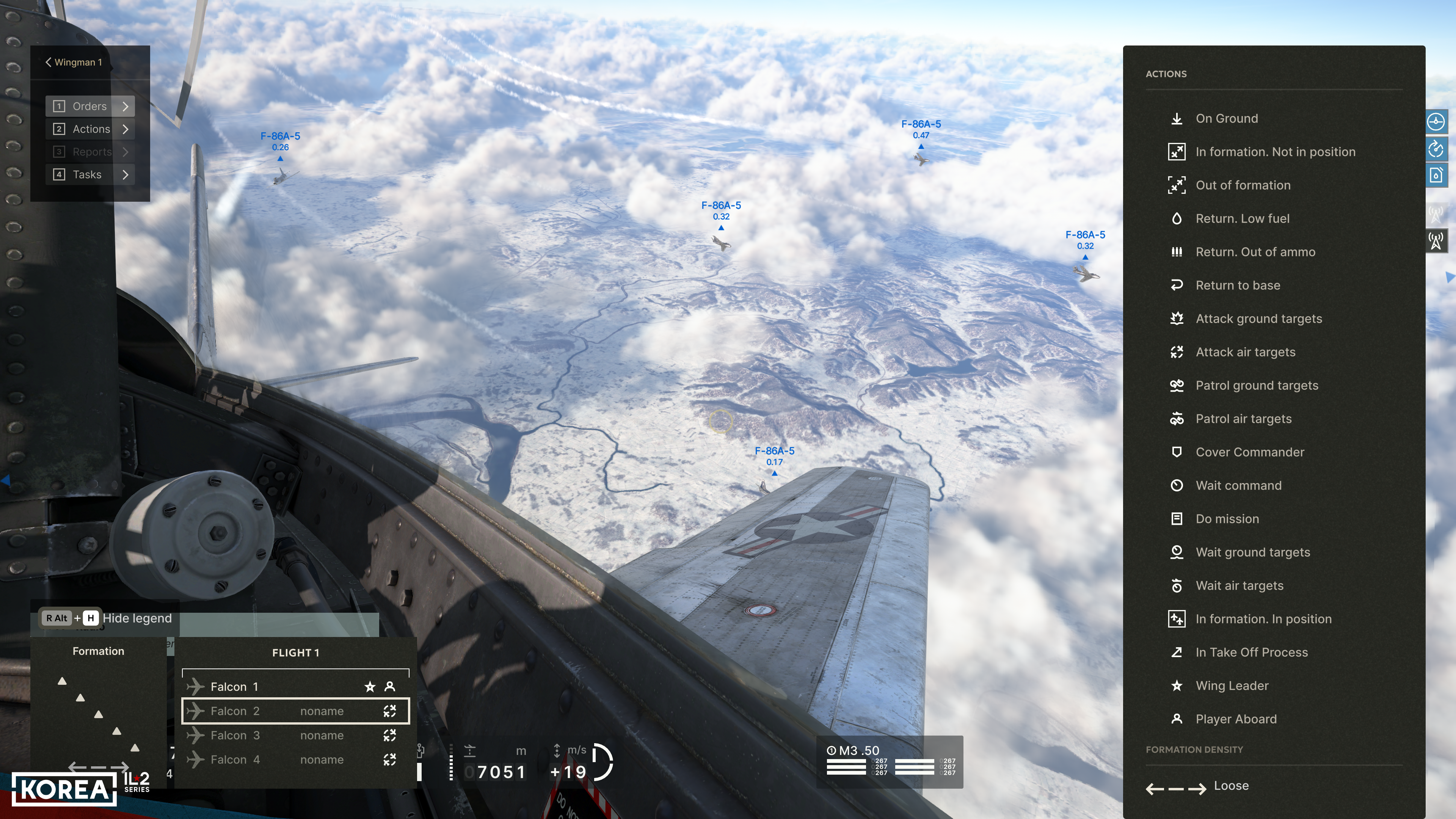
To make wingman behavior easier to understand, we've enhanced the wingman command dialog. The updated menu displays key information about the status of all the player's wingmen and their current tasks. This information is presented through clear, easy-to-read infographics that update dynamically as the situation changes.
We've also added an extensive system of tips and explanations to the dialog. It will help players quickly understand how wingman commands work and get comfortable using them.
We believe that this kind of misunderstanding—which the new feature is designed to address—is behind nearly half of the problems players experience with aircraft AI. Even so, this is not the only area of our work on AI.
We've already made numerous changes to the air combat logic of AI-controlled aircraft. Some of them, as you may recall, were included in previous updates. But we haven't stopped there: we're planning to release another substantial batch of new features and improvements for aircraft AI in Update 1.006, which is coming soon.