


Dev Blog #62
Hello, comrades!
It’s no secret that aircraft were always painted in very different ways. This is due to various goals: camouflage and the need for easy aircraft identification. Usually, these contradicting goals had to be met at once by painting the aircraft in a peculiar way so it was more difficult for the enemy to spot, while still easy to determine whether it was a friendly or enemy one. Within a short period, the same aircraft could be repainted several times for various reasons: for example, as the B-29s transitioned to night combat missions, they began to be painted dark on the underside.
As you may have guessed, today we will be talking about how you can personalize your aircraft in "Korea". As with all other aspects of the project, we have tried to set a new standard of quality here as well.
It’s no secret that aircraft were always painted in very different ways. This is due to various goals: camouflage and the need for easy aircraft identification. Usually, these contradicting goals had to be met at once by painting the aircraft in a peculiar way so it was more difficult for the enemy to spot, while still easy to determine whether it was a friendly or enemy one. Within a short period, the same aircraft could be repainted several times for various reasons: for example, as the B-29s transitioned to night combat missions, they began to be painted dark on the underside.
As you may have guessed, today we will be talking about how you can personalize your aircraft in "Korea". As with all other aspects of the project, we have tried to set a new standard of quality here as well.
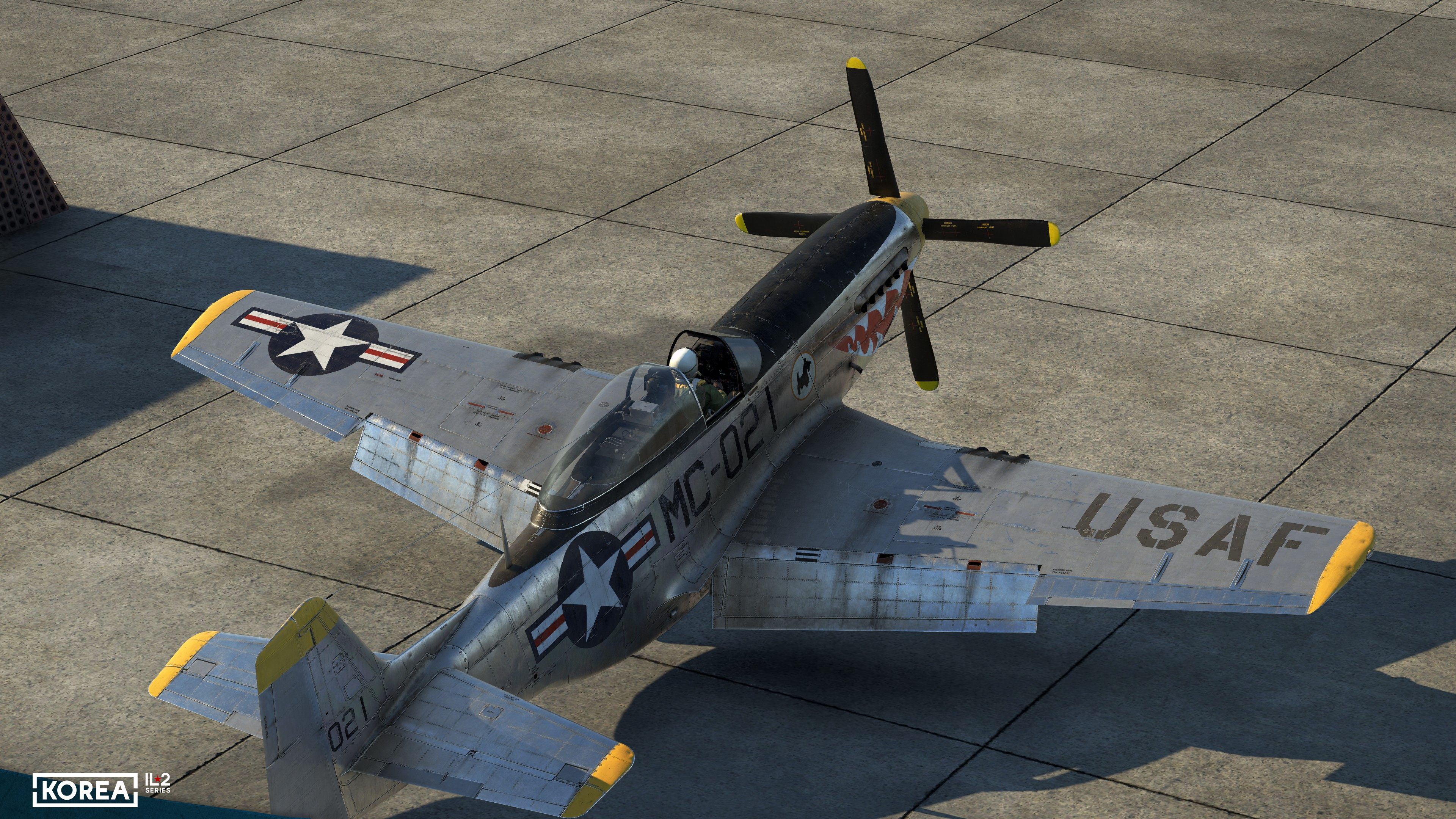
First, "Korea" features a much more advanced aircraft numbering system than Great Battles. The maximum number of digits in the numbers is now twice as many, up to eight, and the layout and composition of the symbols better reflect the Korean War period. For the MiG-15, it is now possible to apply red numbers with outlines.
In addition to numbers, there are now dynamically changing marks on the aircraft indicating aerial victories. In real life, of course, these marks were painted however people liked, there were no rules. Furthermore, in this war, there were no longer any sky-high ace victory counts. But in a multiplayer game, where these marks display the player’s current streak (the number of victories at the start of the flight, counting from the last defeat on the server), these values can become significant for experienced players. An experienced player or their subordinates can achieve even greater records in Commander Career mode. We had to develop a realistic system for displaying victories on board the aircraft, accounting for such potential situations.
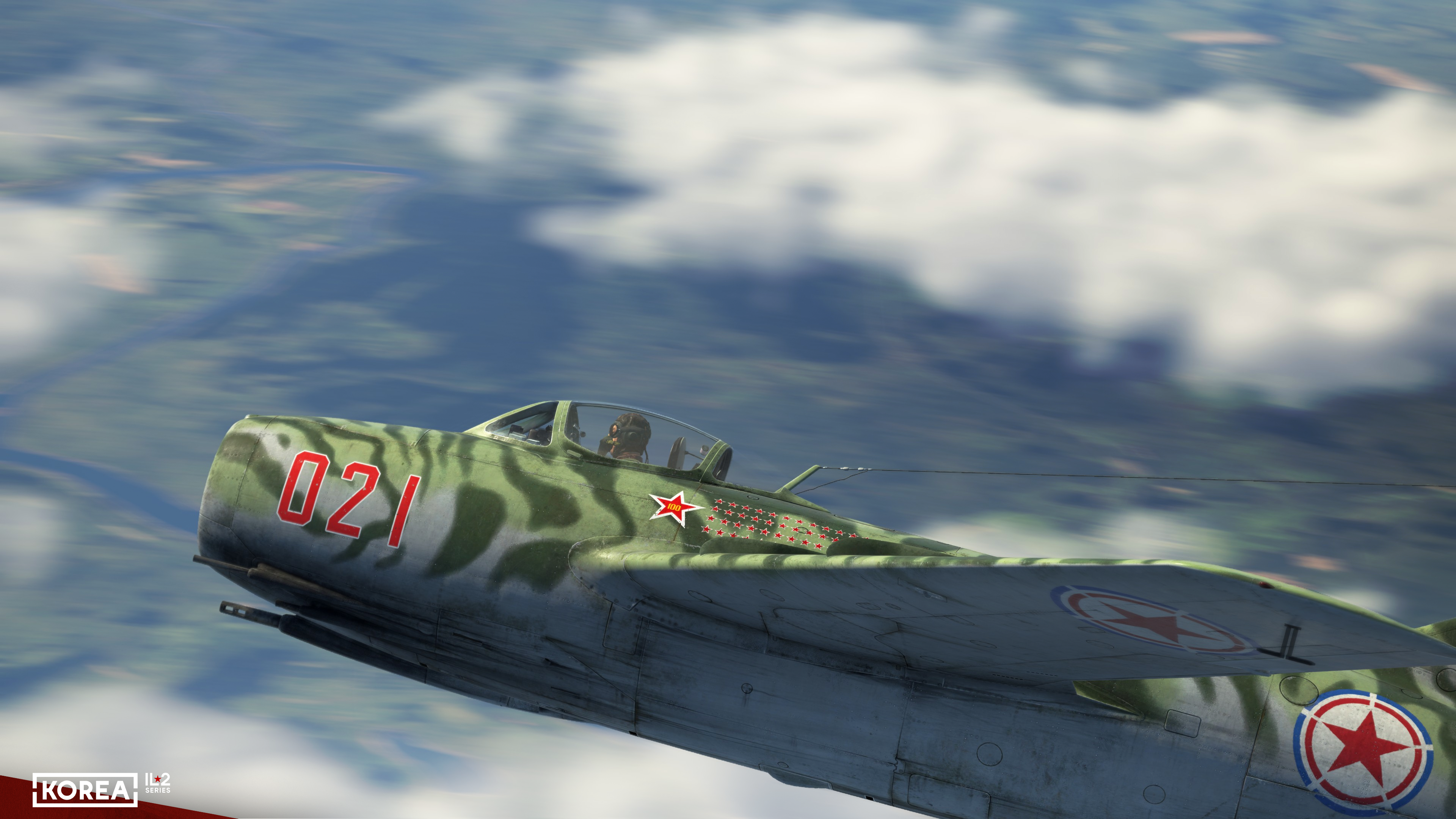
Interestingly, for pilots from socialist countries and Americans alike, victory marks were represented by stars. Since World War II, Soviet pilots drew stars to mark victories achieved in the name of their homeland. At the same time, Americans approached victory marks differently — they symbolized who exactly they shot down (crosses for Germans, Japanese flags for Japanese, etc.). Therefore, ironically, in the Korean War, pilots on both sides painted stars to mark their aerial victories. Nevertheless, we tried to make the style of these stars noticeably different, based on available photographs.
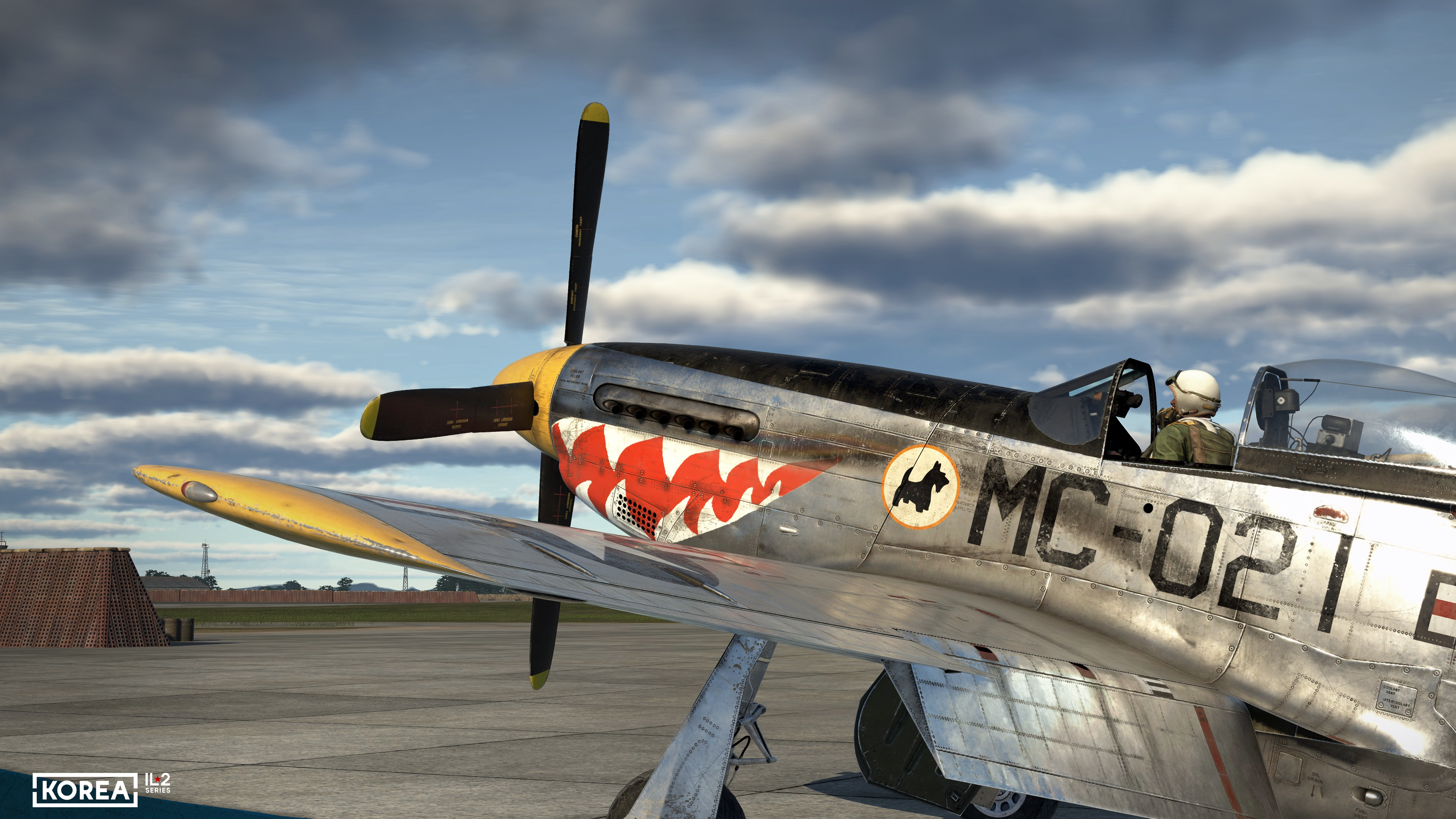
Another new dynamic element of aircraft customization for us is the emblem system. For the Americans, we have created an atlas of such side emblems, reproducing the insignia of the squadrons that took part in the Korean War. This allows players not only to apply these images to their aircraft but also to use them for AI-controlled American aircraft in career mode, which is historically accurate. On the "red" side, things are a little more complicated in this regard: during the Korean War, none of the three socialist powers involved used squadron emblems or personal images of pilots. Nevertheless, at least for multiplayer games, we wanted to give players on the "red" side this opportunity, so an interesting solution was chosen: various awards — Soviet, Chinese, and North Korean — can be selected as emblems on Soviet-made aircraft.
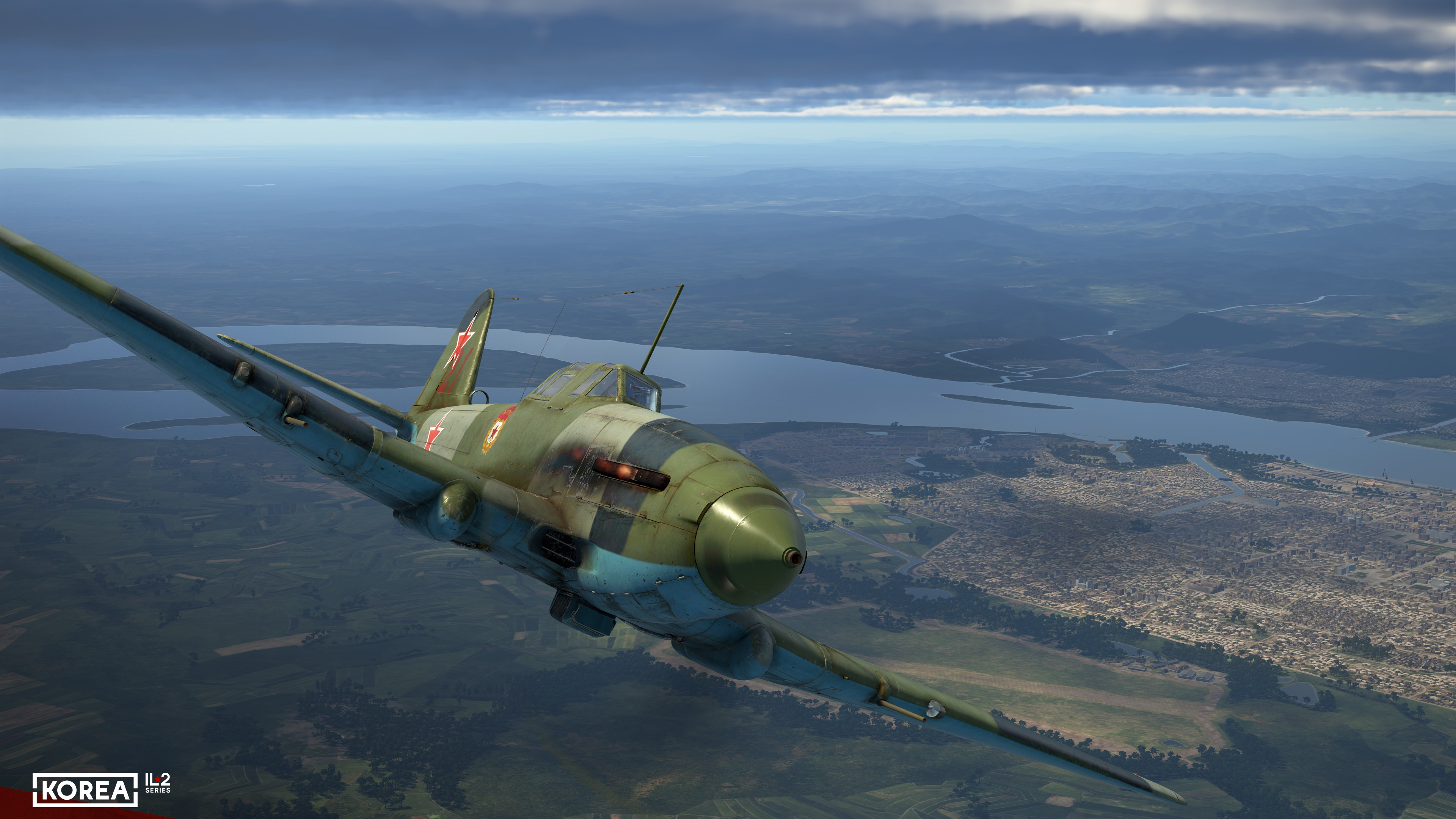
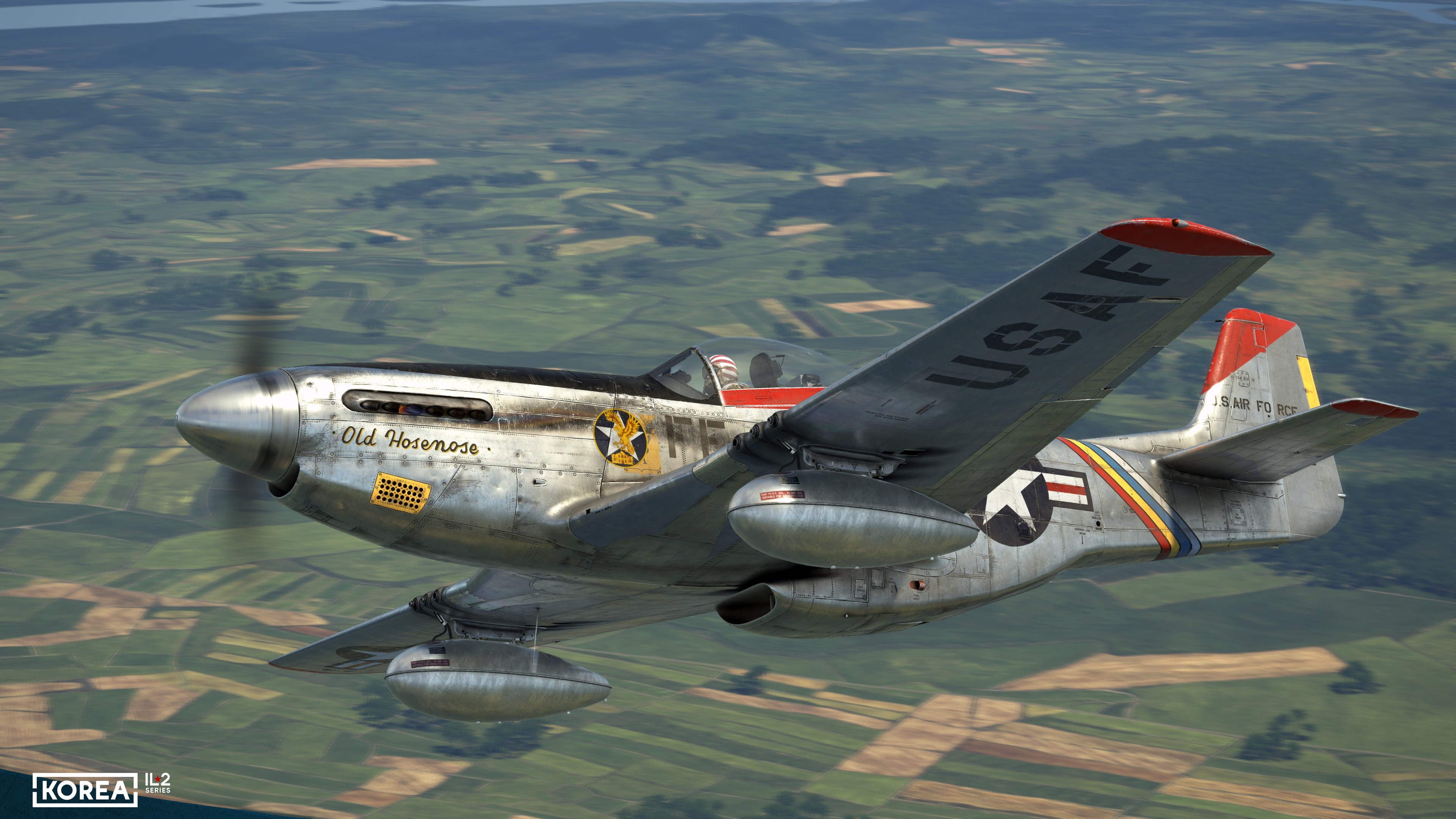
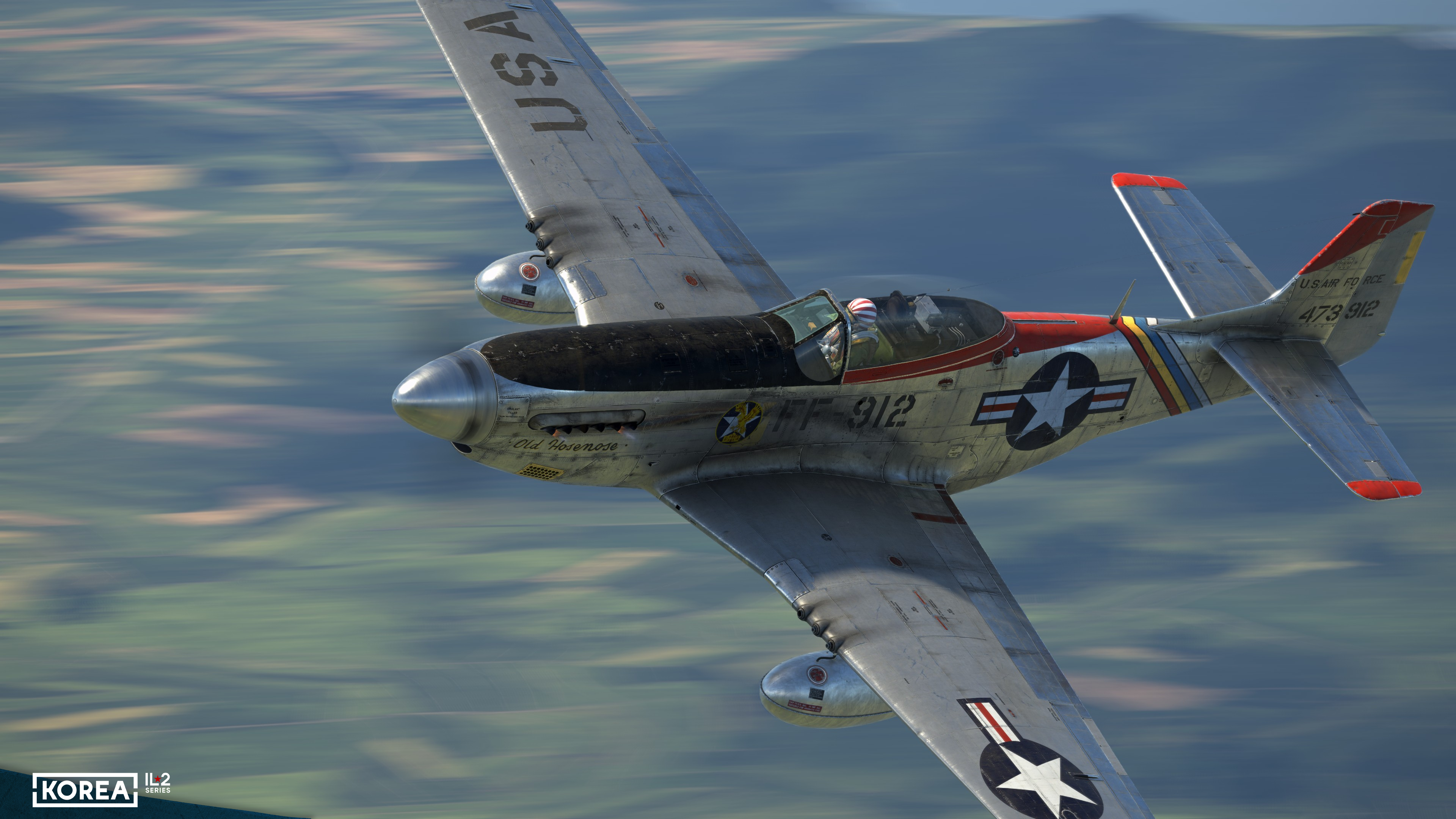
Next, let’s talk about what changes the appearance of an aircraft the most — liveries. Of course, they are present in almost any flight simulator, but here we have our own twist. Each paint scheme featured in Korea is not just a beautiful piece of art — each scheme reproduces with maximum accuracy a specific aircraft that actually existed during that period. Among specific historical aircraft, we chose to reproduce in the game those with the most interesting paint schemes or those flown by famous aces.
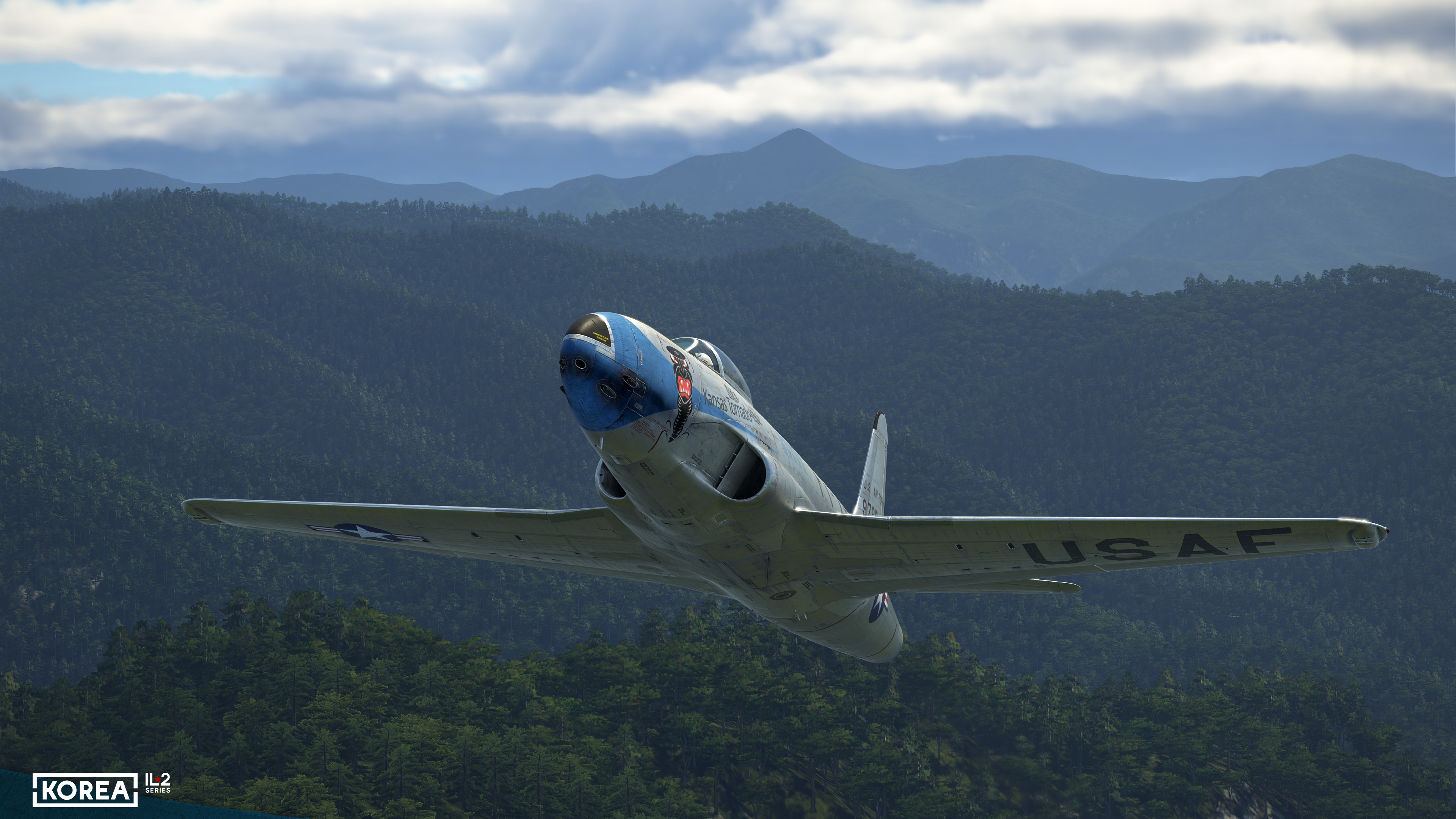
Often in the flight simulator genre, paint schemes are approached formally — the placement of markings and color elements is perfectly accurate, and everything looks freshly painted. We approach this issue with the utmost attention to history, recognizing that even such "named" aircraft already had varied histories of use. We invite you to take a look at some of them: the period of this war is also interesting in that each side of the conflict had paint schemes to suit every taste.
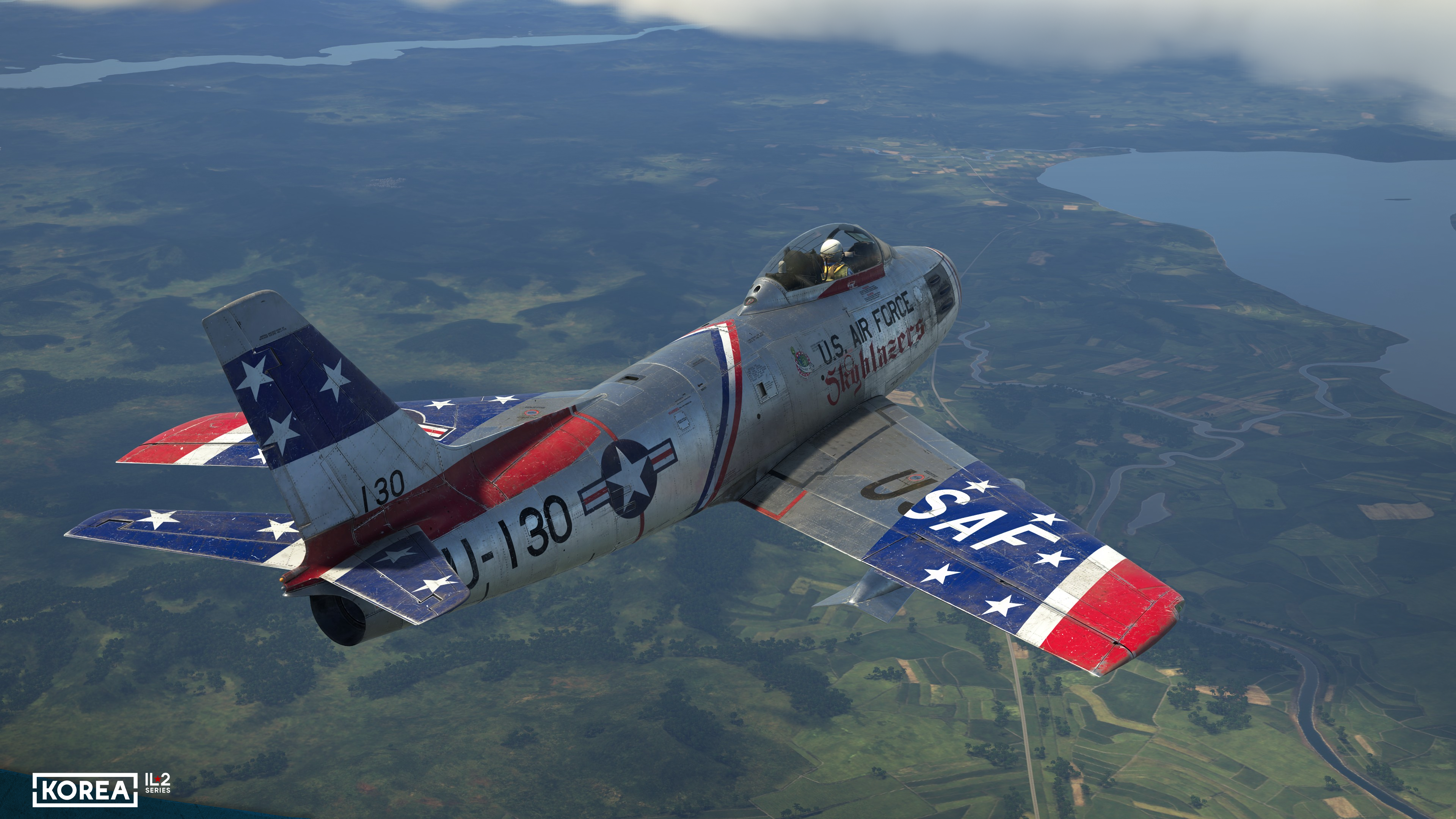
Speaking of additional paint schemes, we cannot fail to mention the unique schemes created specifically for the pre-order program. The first one belongs to the US Air Force aerobatic team Skyblazers. This was the second military aerobatic team of the US and the first of the USAF after the Blue Angels, which belonged to the Navy. It was founded in 1953 to participate in shows in Europe. Initially, they used F-80C-10 Shooting Star jets, but a year later, in 1954, the 48th Fighter-Bomber Wing was re-equipped with the latest F-86 °F jets, including the Skyblazers. The group existed until 1962, when the Thunderbirds received aircraft capable of long-range flights, and the need for a separate European aerobatic team disappeared. The game features an F-86A painted in the colors of this aerobatic team, which is somewhat of an assumption, but we couldn't pass up this beautiful paint scheme.
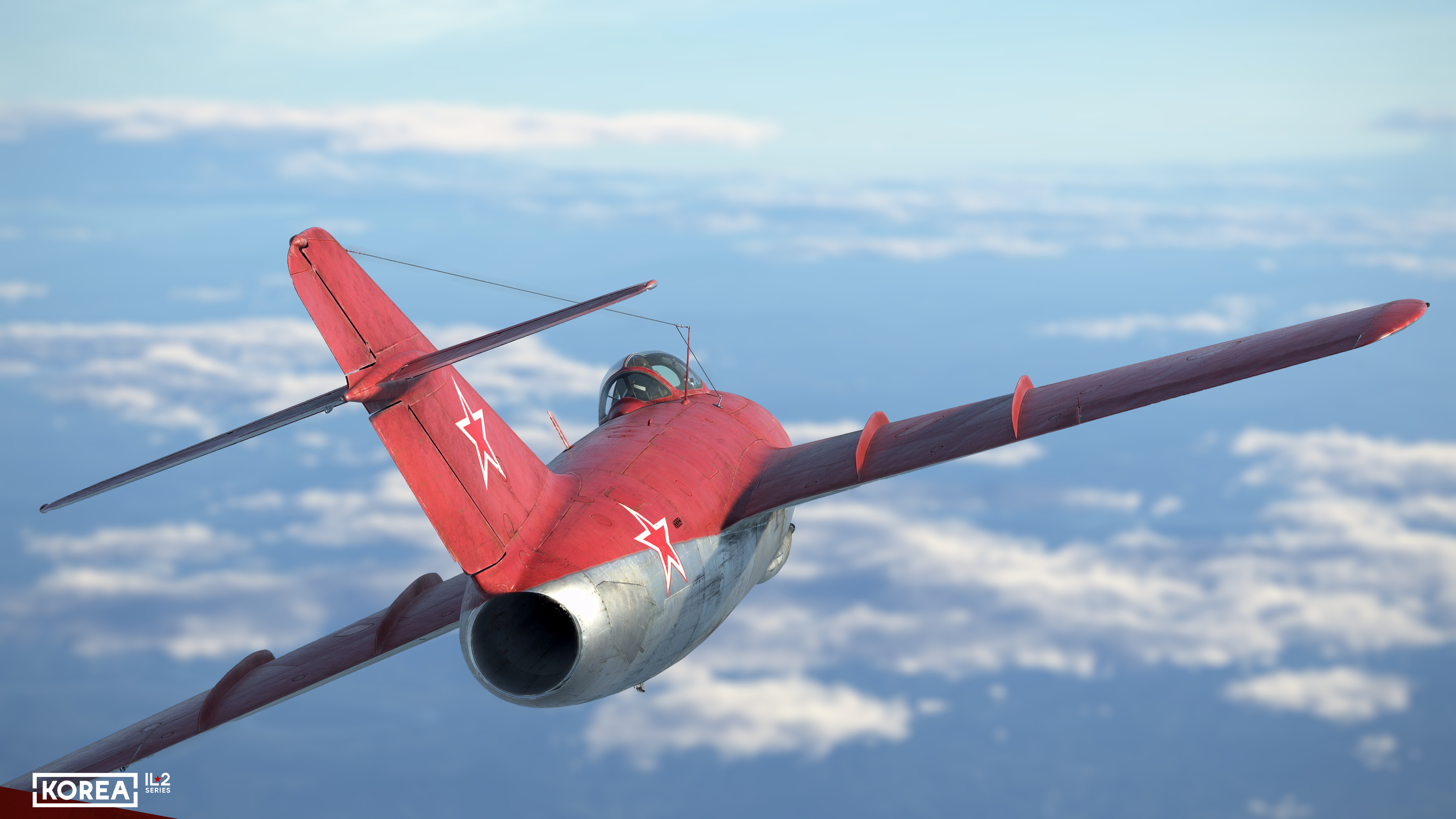
The next paint scheme for the pre-order program is the Red Arrows of the first Soviet aerobatic team, the Red Five. The Red Five Air Demonstration Team was formed in 1935, and its first performance was at an air parade in March of that year. The group consisted of five test pilots, including the famous Soviet pilots Stepan Suprun and Vladimir Kokkinaki. The group started out flying Polikarpov I-16 fighters and, after the war, its pilots first flew Yak-15 jet fighters and then the latest MiG-15s. The MiG-15s were painted in the group’s classic colors: the top of the aircraft was red, and the bottom was light (in the case of the MiG-15, it remained unpainted metal, only varnished). The division of these colors differed from aircraft to aircraft, and we chose the option that seemed the most dynamic to us.
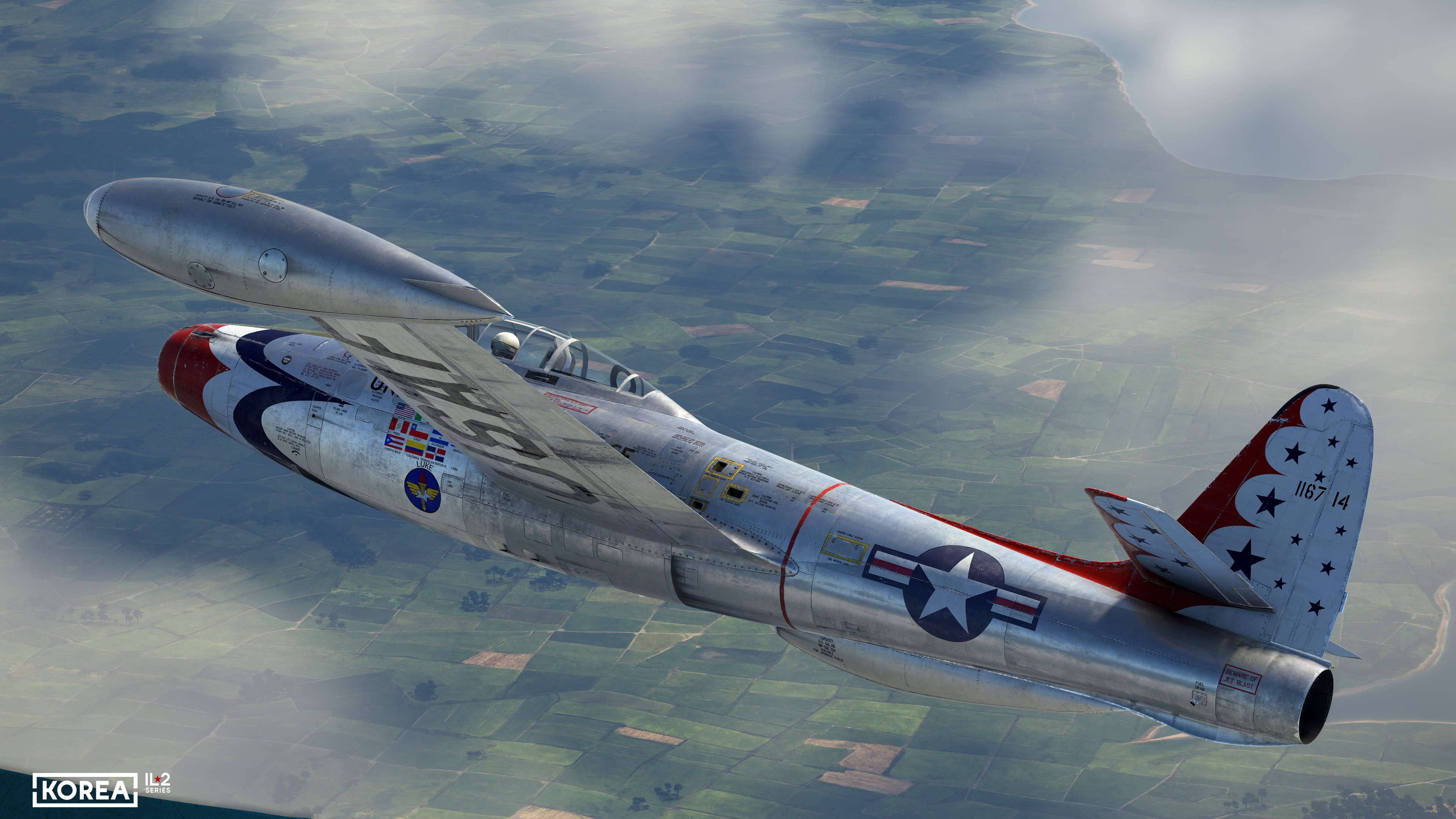
The third paint scheme for the pre-order program reproduces the appearance of real-world stars. In 1953, the US Air Force established its second aerobatic team, the Thunderbirds (the third military aerobatic team in US history). It was a separate 3600th Aerobatic Squadron based at Kelly Air Force Base in Texas. The team started with F-84G Thunderjet fighter-bombers, and it can be assumed that the team’s name is associated with its first aircraft. Interestingly, the color scheme chosen for the Thunderbirds at that time has remained unchanged to this day. However, their aircraft have since been changed four times (F-100 Super Sabre, then F-4 Phantom II, then T-38 Talon, and finally F-16 Falcon, which we all know). In the game, this color scheme can be seen on the F-84E fighter-bomber, which is quite acceptable — the 'E' is very difficult to distinguish from the 'G' in appearance, the main differences between them were in the engine and equipment.
We want to remind you that you can pre-order the project on our website now, and all these paint schemes will be available to you at the start of early access. In addition, you will immediately receive two more Korean War liveries in the Great Battles project. You can view them on our pre-order pages.
We want to remind you that you can pre-order the project on our website now, and all these paint schemes will be available to you at the start of early access. In addition, you will immediately receive two more Korean War liveries in the Great Battles project. You can view them on our pre-order pages.
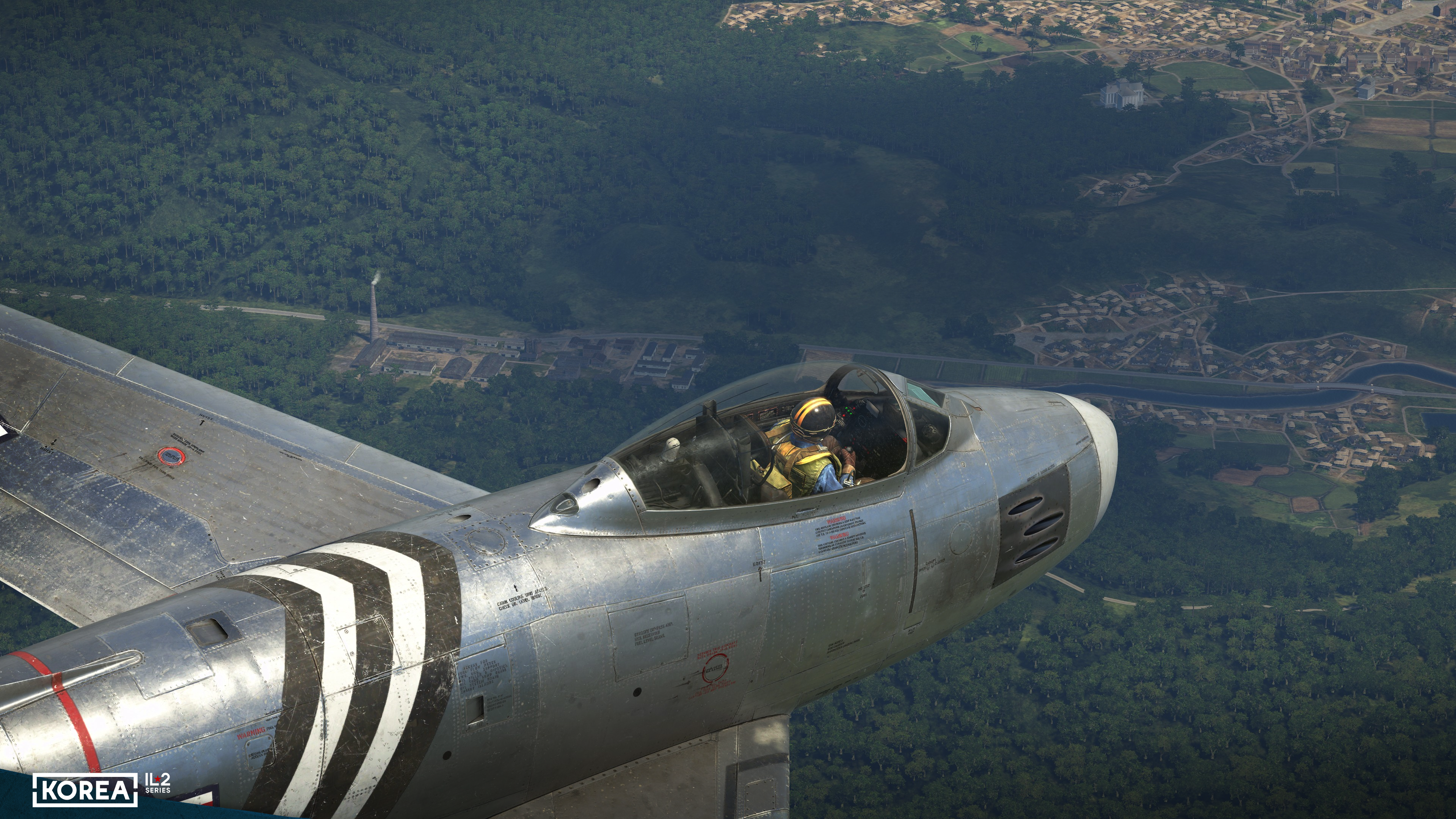
Finally, we should mention one important point for the American side: helmet paint schemes. While "red" pilots in the 1950s, including jet pilots, still used leather helmets, Americans began using hard, smooth-surfaced protective helmets starting in 1946. The first transitional models were almost homemade, and the first standardized P-1 fiberglass helmet was adopted in 1948. This circumstance gave rise to new opportunities to paint these helmets, as they were personal items and nothing limited the pilot’s imagination or artistic taste. Of course, we couldn’t ignore this, and in Korea, American pilots can choose the color of their helmets.
This issue turned out to be quite extensive, but almost all aviation fans love the topic, so we saw an opportunity to discuss it in more detail.