Dev Blog #61
Hello, comrades!
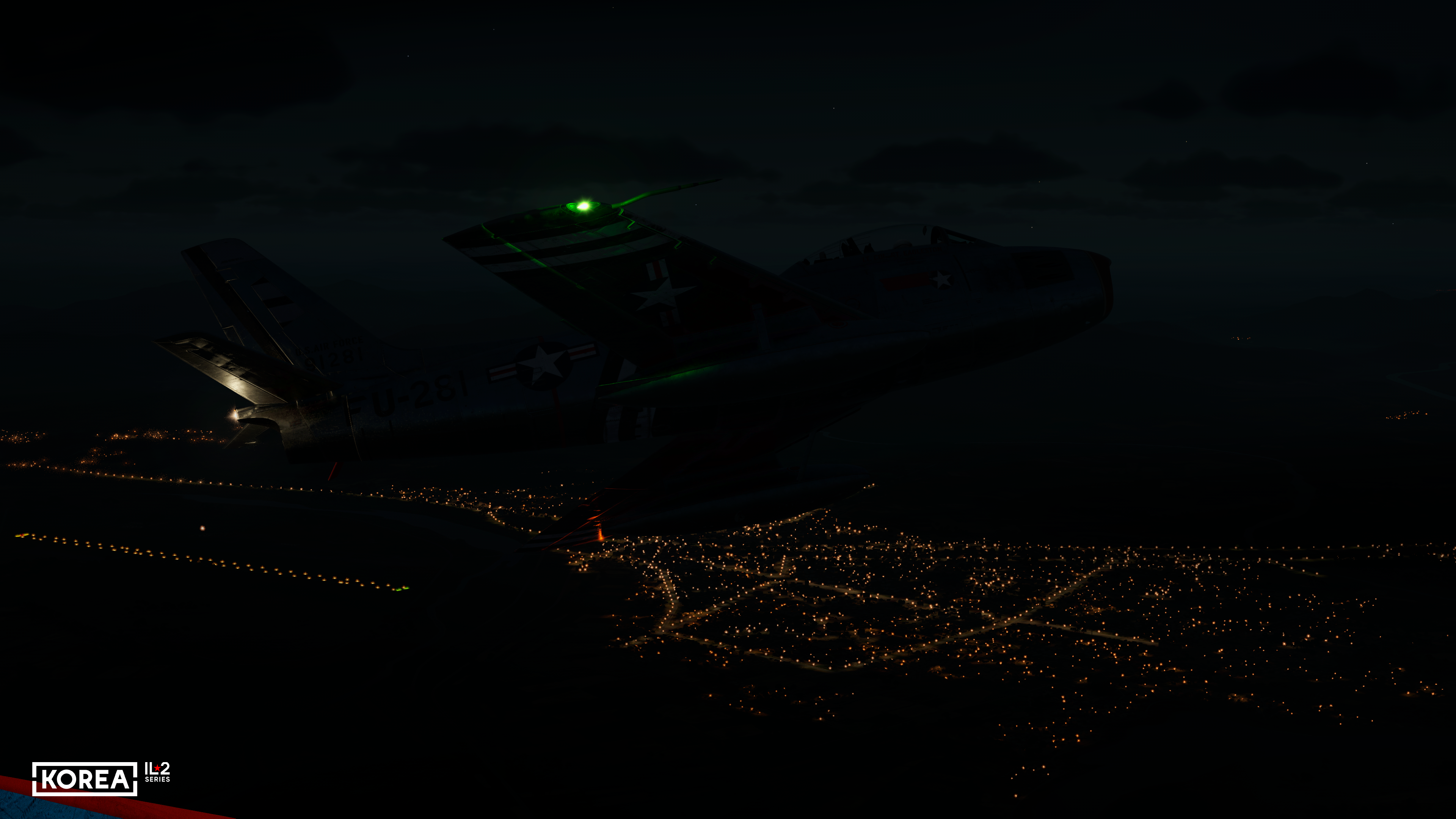
Nighttime is always a difficult aspect to implement in a flight simulator. The difference between nighttime and daytime flights is too great in terms of perception, lighting, and many other factors. The night scene is, in many ways, the opposite of the daytime scene, but the graphics engine must provide a smooth transition from day to night and vice versa within a single space with the same settings.
Nighttime is always a difficult aspect to implement in a flight simulator. The difference between nighttime and daytime flights is too great in terms of perception, lighting, and many other factors. The night scene is, in many ways, the opposite of the daytime scene, but the graphics engine must provide a smooth transition from day to night and vice versa within a single space with the same settings.
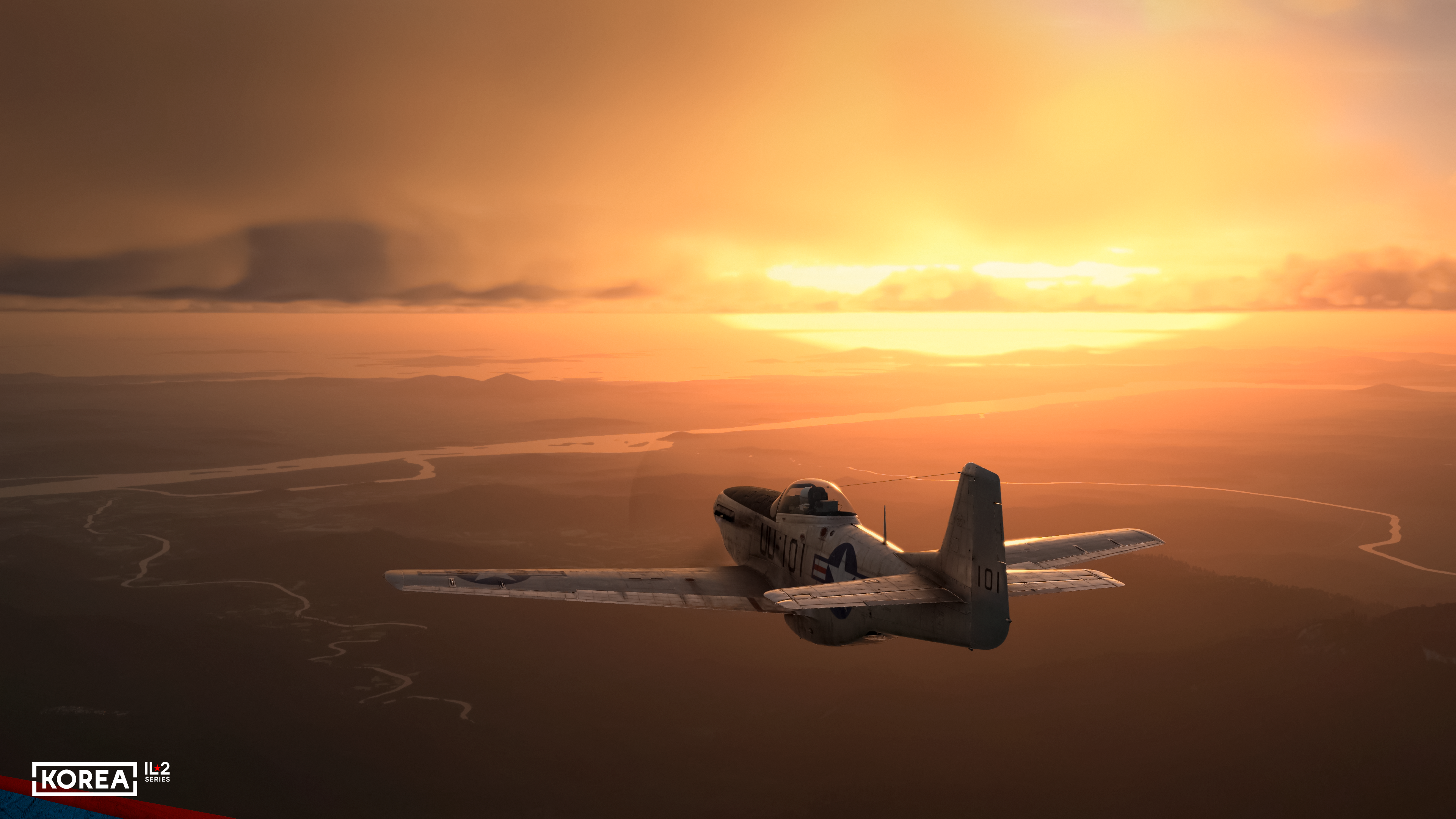
This has always been difficult for all developers, with each team applying their own approaches and making different compromises on this issue. This difficult task has not bypassed us during the development of Korea, because, since the renderer is completely new, a new approach to night scenes had to be developed practically from scratch. On the other hand, this allowed us to review several old solutions that were once optimal but now seem outdated. Nighttime in Korea is radically different from anything we've seen in our previous projects.
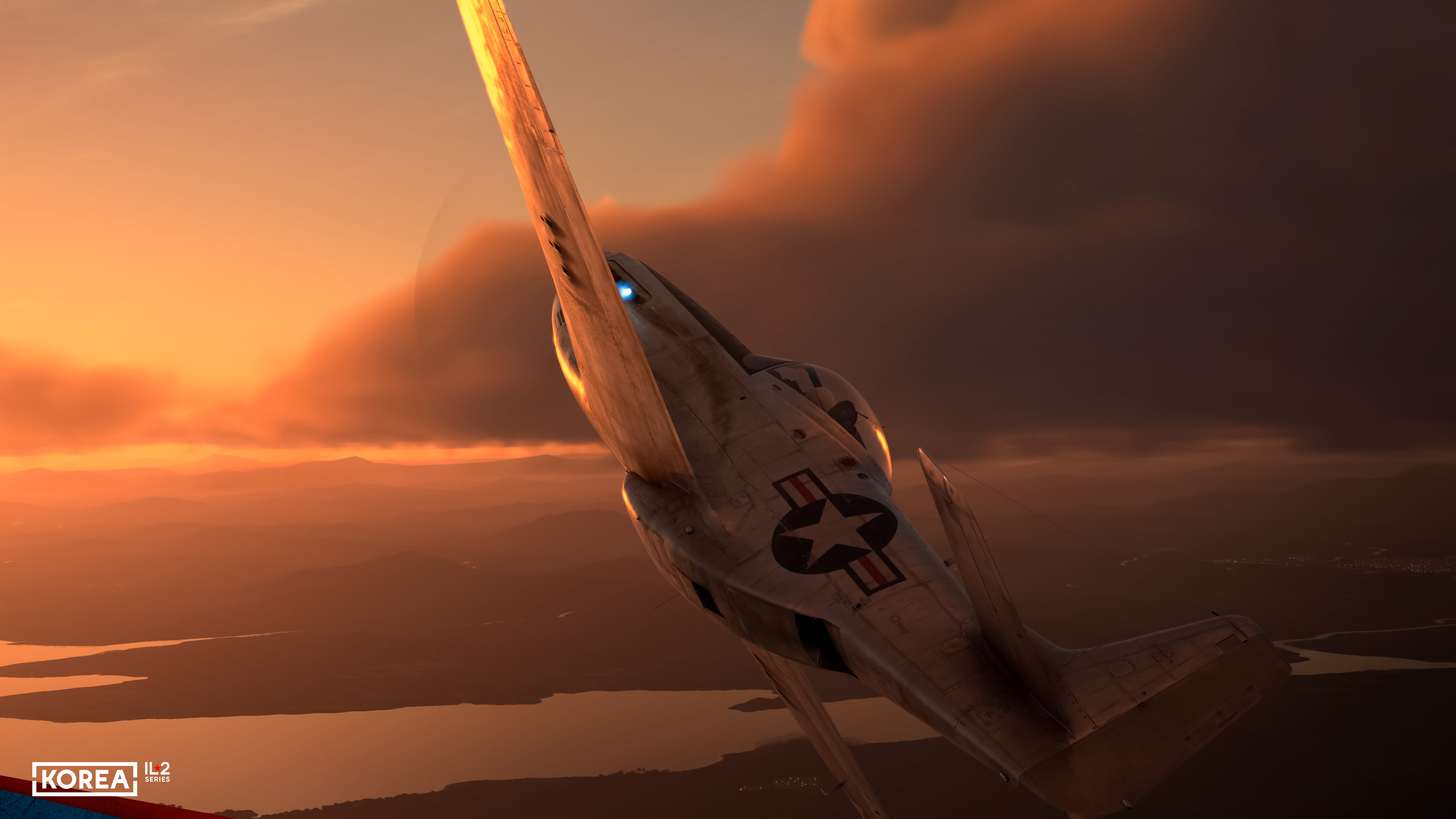
The new lighting and atmosphere system in the graphics engine is based on physical principles and accounts for the Earth’s geometry, the atmosphere, aerosol distribution, and changing air density at different altitudes. This in itself produces several interesting and very beautiful effects at the boundary between day and night, including different levels and shades of lighting at different altitudes, the shadow of the Earth in the atmosphere (the so-called Venus Belt), physically realistic shades of the sunset sky, and much more.
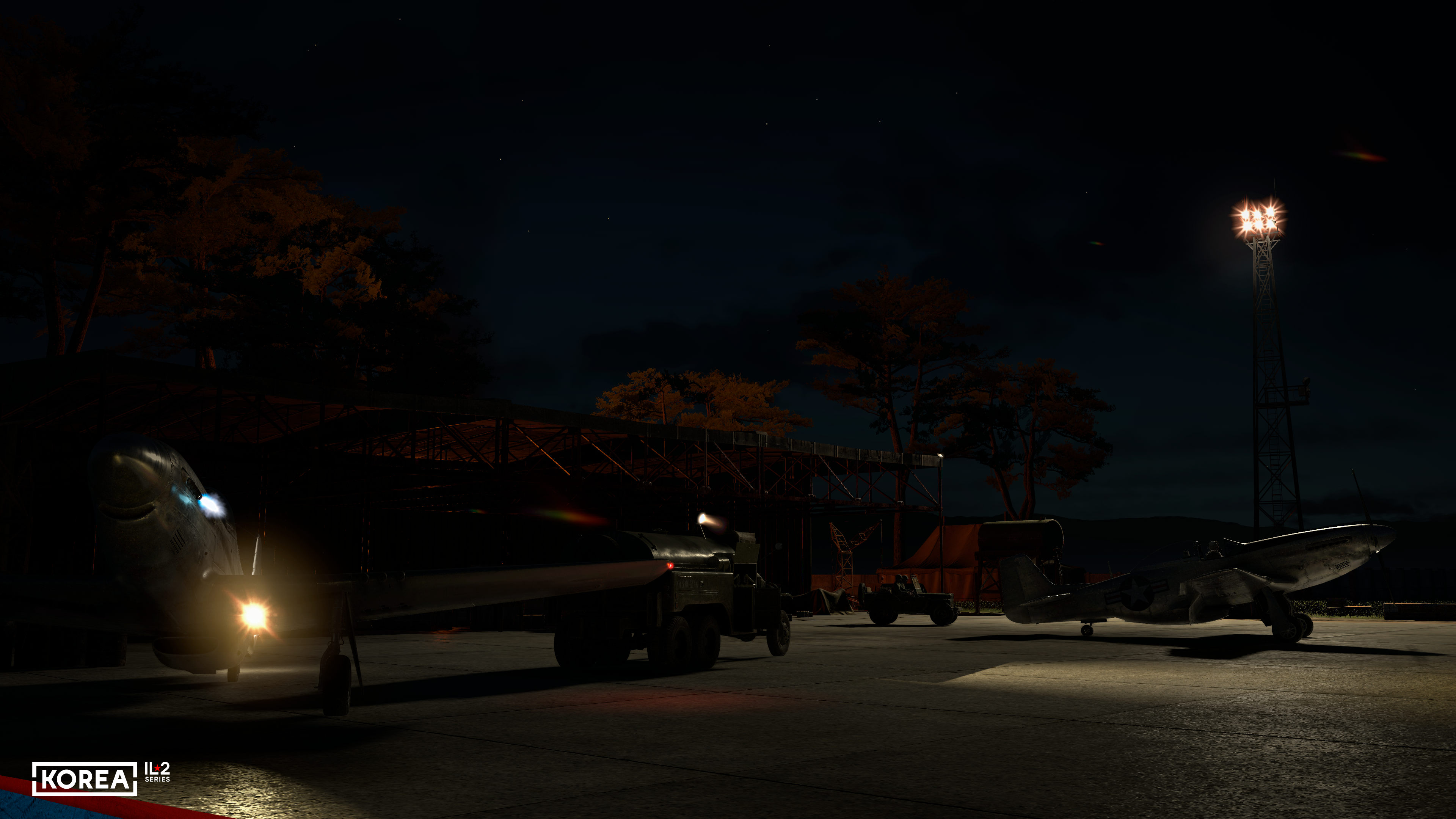
It is important to note that the image in the flight simulator is created not only by natural light from the sun and moon, but also by a huge number of artificial light sources: airfield lights, city lights, road lighting, and light from cars. In combat conditions, this also includes fires and illumination munitions.
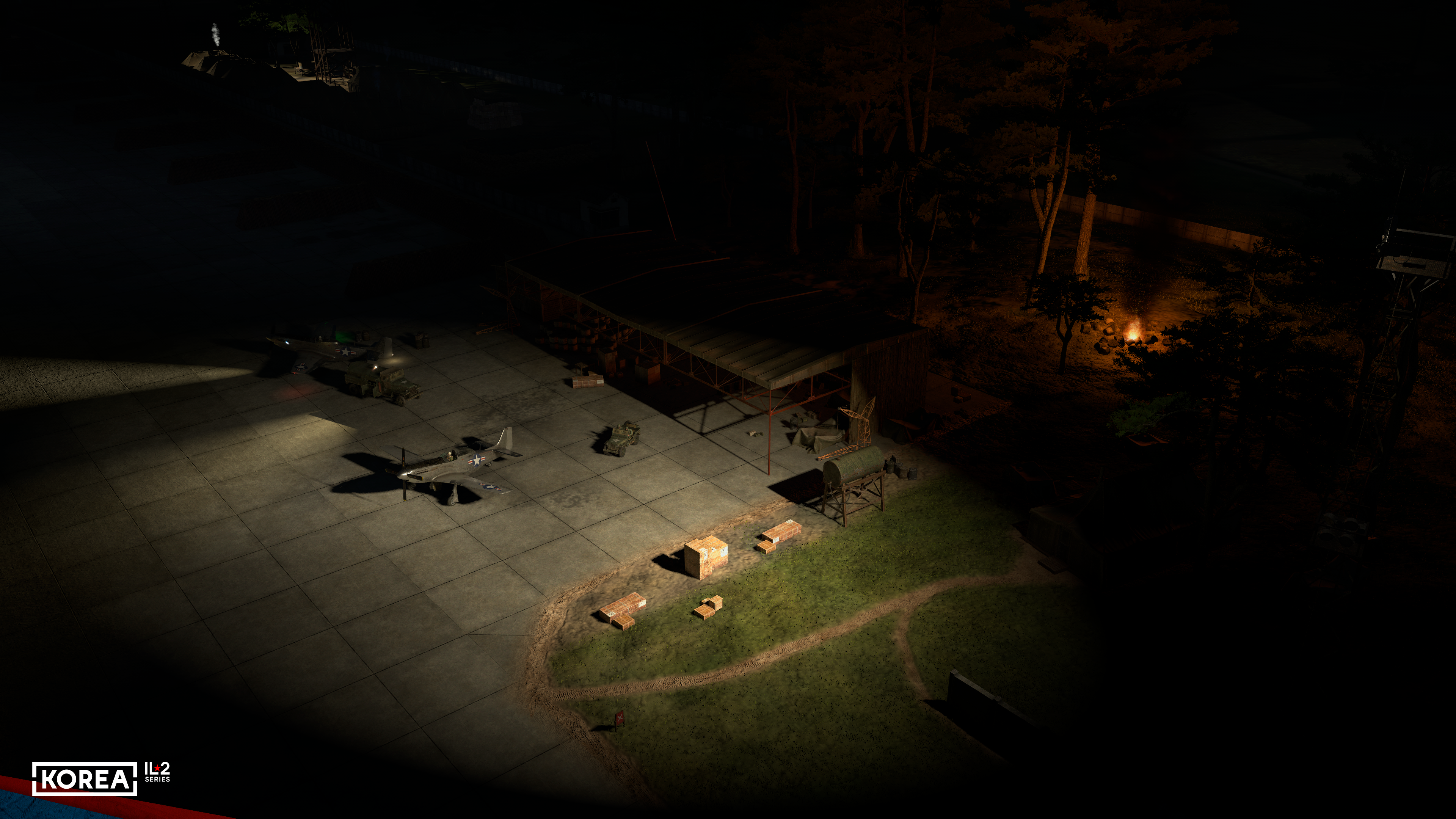
We recreate all of this in "Korea"; most of it is being implemented by us for the first time. The night lighting system for cities and roads is particularly interesting.
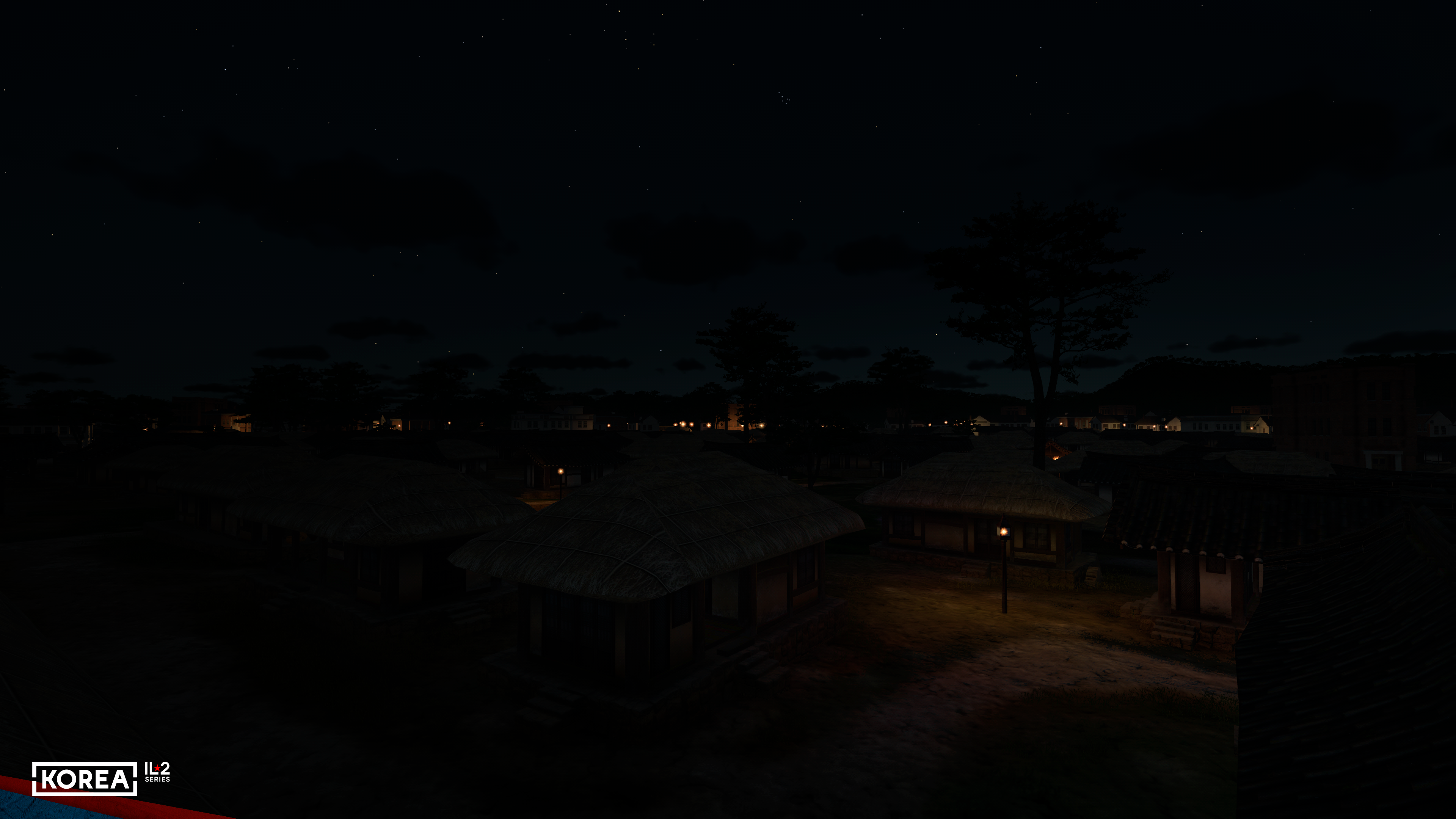
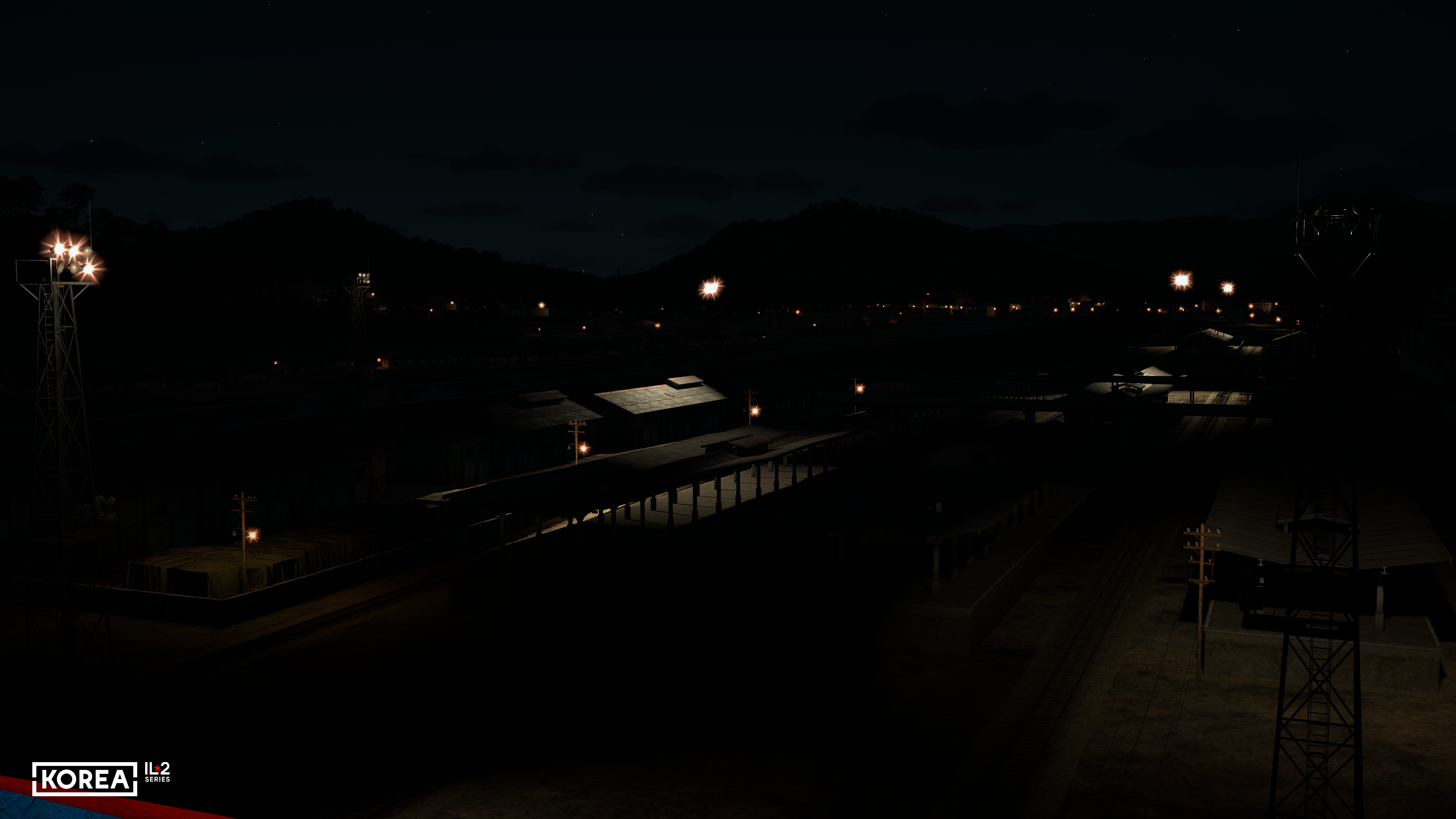
Building a system where thousands of light sources across the map illuminate the landscape and objects, significantly increasing the variety and quality of the image without leading to a huge loss of performance, is a real challenge for developers, and one that we have taken on. The result is truly impressive.
In addition to city lighting, we have implemented dynamic ultra-high-intensity light sources for the first time: illuminating aerial bombs needed for night combat operations. For example, the SAB-100 bomb provided 2,000,000 candelas of light for almost five minutes, illuminating an area with a radius of up to three kilometers.
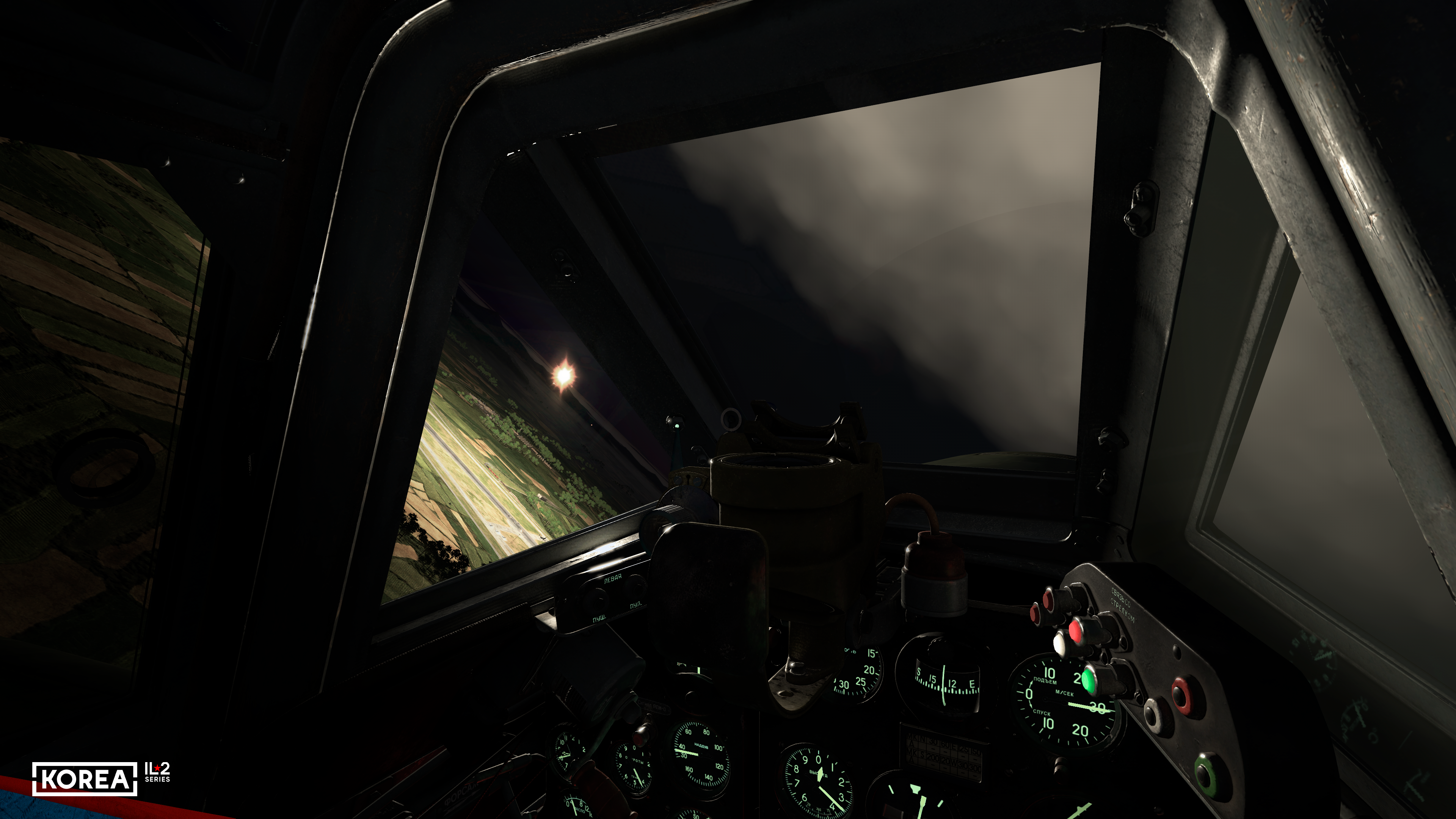
Previously, we could only illuminate objects at a distance of no more than 400 meters from the light source, but now this figure has increased sevenfold, and the area covered has increased more than 50-fold. The game will feature three types of illumination ammunition: the Soviet SAB-100 with 2 million candelas, and the American M26 and Mk8 with 800,000 and 500,000 candelas, respectively. In the future, after the releease, there is an idea to implement illumination ammunition for artillery as well, so the player can see illumination shells at work on the front line at night.
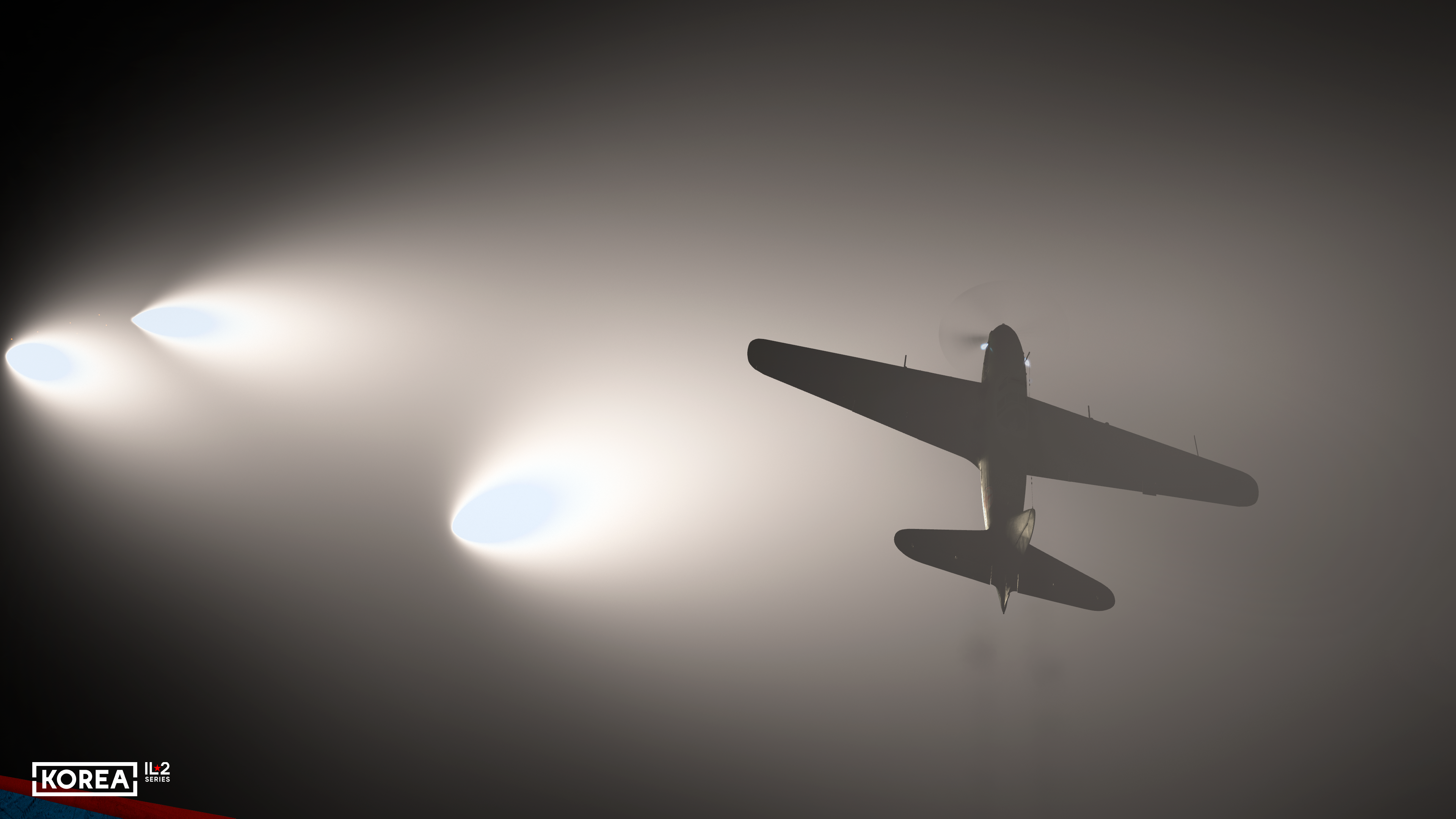
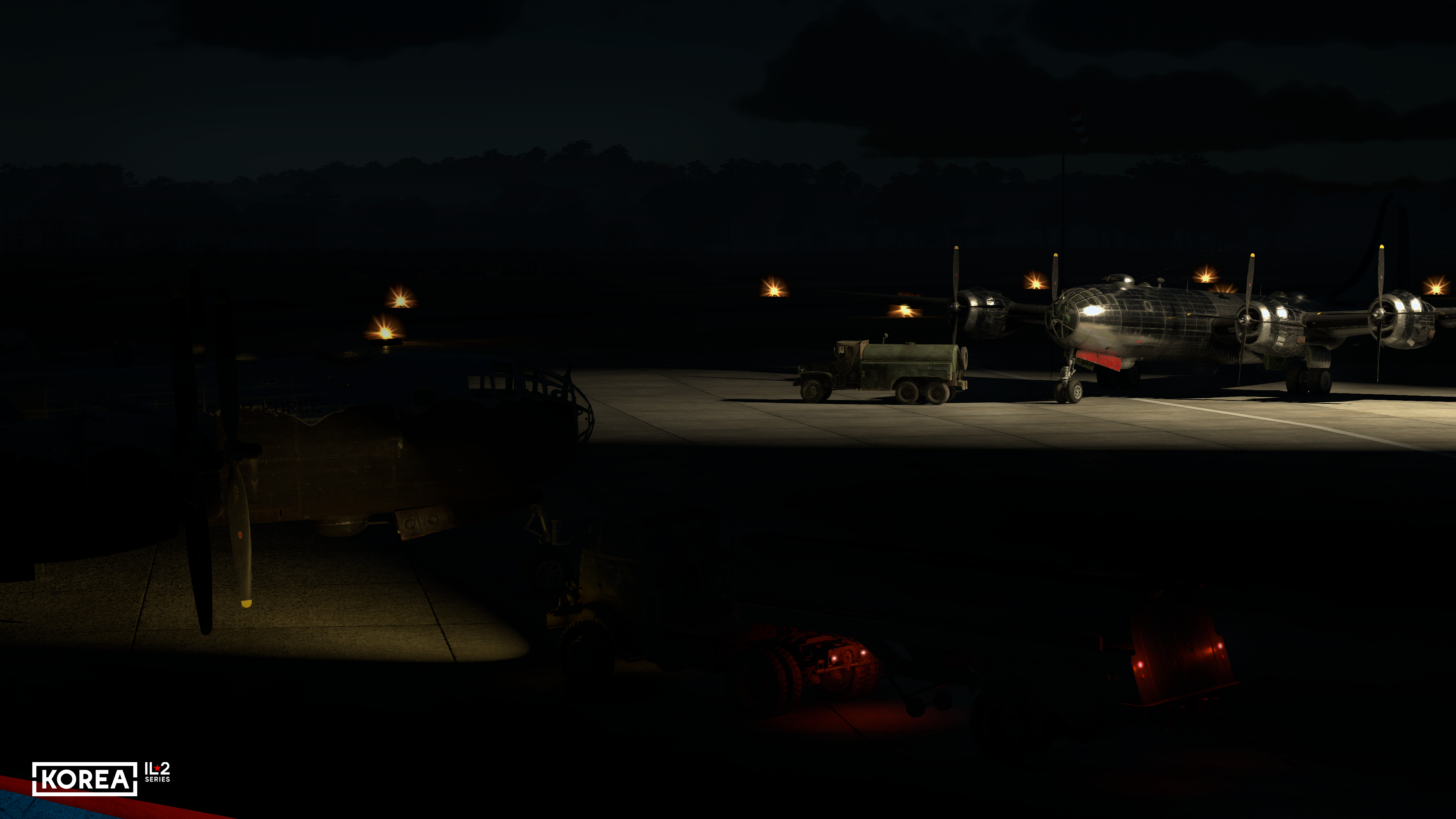
It should be noted that the aircraft themselves have received an improved effects system, including new light sources. Air navigation lights, engine exhaust flashes, and jet nozzle exhaust during engine start — all illuminate the aircraft and the objects around it. New nighttime natural lighting, city lights, anti-aircraft searchlights, and illumination bombs all combine to create a new, interesting, realistic, and exciting picture of night flight in Korea.